



In the context of publishing activities facing numerous pressures from market mechanisms and the increasingly urgent need to ensure the quality of published content, how can we both enhance the effectiveness of publishing partnerships and maintain the "gatekeeper" role of publishing houses? What regulations need further improvement to "close" loopholes in the publishing process and enhance the responsibility of editors? The website of the National Political Publishing House would like to quote an article from the Hanoi Security Newspaper introducing the opinion of Comrade Nguyen Thai Binh, Deputy Director - Deputy Editor-in-Chief of the National Political Publishing House.
All stages of the book publishing process need to be tightened.
The website of the National Political Publishing House would like to republish an article from the Hanoi Security Newspaper introducing to readers the opinion of Comrade Nguyen Thai Binh, Deputy Director - Deputy Editor-in-Chief of the National Political Publishing House.
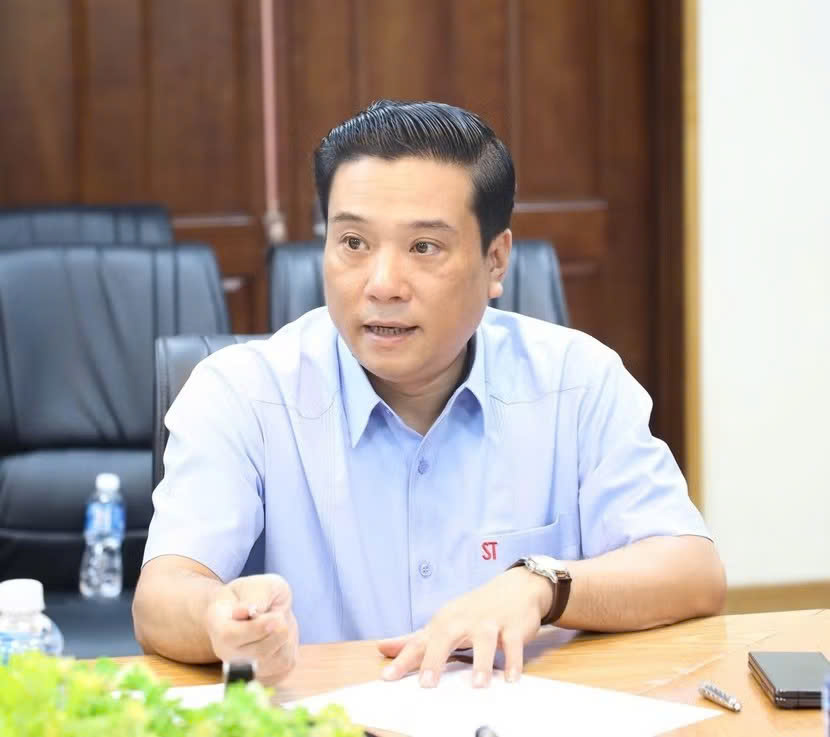
Comrade Nguyen Thai Binh, Deputy Director - Deputy Editor-in-Chief of the National Political Publishing House Truth.
The manuscript processing procedures at the National Political Publishing House are very rigorous. All stages, from receiving manuscripts to content review, typesetting, proofreading, printing, and distribution, must strictly adhere to the editorial and publishing process. Therefore, most of the publishing house's publications ensure high quality in both content and form.
At the National Political Publishing House, after receiving the manuscript from the author, the editorial board leaders and editors will conduct a preliminary review to assess the content, structure, and layout, and then provide guidance and suggestions for improvement. Simultaneously, a working group comprising content editors, art directors, media representatives, and distributors will develop a distribution plan.
Throughout the editing process, the editorial board and authors maintain close communication and collaboration to exchange ideas, agree on content revisions, and finalize manuscripts based on the professional opinions of the editorial board and the publishing house's leadership. The average time from when authors or partners submit manuscripts for publication is 6 to 9 months to finalize the content and ensure publication quality at the National Political Publishing House.
The standard editing process is as follows: editors edit the content and agree on the format => the head of the reading committee reviews and further refines the manuscript => the editorial secretariat reviews, checks, and provides feedback for revisions (if needed) => the Deputy Director - Deputy Editor-in-Chief/Member of the Editorial Board - Publishing approves the content and provides feedback on the editorial board's suggestions and proposals regarding the manuscript content => the Director - Editor-in-Chief approves the content and approves printing, and will decide whether or not to approve the content at each editing and approval stage.
The editing and review steps are all documented on the manuscript for subsequent review. In addition, the book editing and publishing process of the National Political Publishing House includes two steps: technical editing, which involves reading the proofs and reviewing the content and format of the manuscript before printing, and reading the sample book after printing, before further finishing.
However, the current reality shows that some publishers have not given adequate attention to content editing in the editing and publishing process. Part of the reason is that many still believe that publishers only function as printing houses. Some authors and partners believe that their product is complete, and the publisher only needs to do layout, proofread, and issue a publishing license before releasing the book to the market. This is very dangerous, because books are completely different from newspapers. A published and distributed book will be stored in libraries for hundreds of years or even longer; a book with poor content will still be read and exploited by many generations, and this incorrect perception will lead to incorrect actions. An incomplete understanding of the role of editing has led to the underestimation of the efforts of the editorial team, while this is a crucial step in determining the quality of published works.
Furthermore, training and professional development aimed at improving the expertise and political theory of editors and publishing staff in some publishing and media agencies still face certain limitations. One reason is that these units are under pressure during the implementation of the autonomy mechanism, while revenue is declining, so investment in training and professional development has not received adequate attention.
Limitations in awareness and the quality of the workforce have contributed to shortcomings in the editing and publishing process in some areas. It must be frankly acknowledged that the mistakes in publishing activities in the past stemmed from the failure to strictly adhere to the editing and publishing process; some books with harmful and toxic content exploited loopholes in the process to get "approved" and published, negatively impacting readers' perceptions and potentially leading to "cognitive pollution" in society.

The booth of the National Political Publishing House Truth at the Spring Book Fair 2026.
Furthermore, the current publishing industry is also facing several other difficulties. The protection of copyright and related rights for publications is not effectively implemented in some areas, and copyright infringement still occurs; some readers do not pay sufficient attention to using publications in accordance with the law, and in some cases, intentionally violate copyright regulations. At the same time, the management of publishing partnerships and the enforcement of some publishing laws still have shortcomings. For example, Article 28 of the 2012 Publishing Law stipulates that publications can only be released 10 days after depositing them for legal deposit; however, in reality, books appear on the market immediately after being deposited for legal deposit. These shortcomings need to be addressed promptly to improve the effectiveness of state management and ensure the quality of publishing activities.
In the future, I believe it's necessary to tighten all stages of the book publishing process, especially the review, editing of book content, and censorship procedures. Each editor needs to self-train and improve their theoretical and political awareness; publishers and media agencies should invest in improving the professional and political knowledge of their editors and encourage them to actively participate in combating harmful and toxic information. Only then can we avoid works that are weak in content and harmful in ideology, contributing positively to bringing good works and quality books to readers and affirming the role of books in social life. As General Secretary Nguyen Phu Trong has repeatedly said: " Books are historical documents that will last for generations, so we must be careful and meticulous in every sentence and every word; we must not be careless or superficial; we must ensure scientific and political accuracy, and be very precise ."
According to Van Que (Hanoi Security Newspaper)
See the original article on An Ninh Thu Do Newspaper: https://anninhthudo.vn/can-siet-chat-lai-tat-ca-cac-khau-trong-quy-trinh-xuat-ban-sach-post657769.antd

Comments