



Associate Professor Dr. Vu Trong Lam, Director and Editor-in-Chief of the National Political Publishing House, spoke with a VNA reporter about the article "Vietnamese Revolutionary Journalism in the Digital Age" by General Secretary and President To Lam.
From the article by General Secretary and President To Lam: The press must help people understand, trust, and stand alongside.
The press must communicate theoretical and political issues using modern, accessible language, closely related to the concerns of the people. To protect the Party's ideological foundation, it is essential to first ensure that the people understand, trust, and support it. This was shared by Associate Professor Dr. Vu Trong Lam, Director and Editor-in-Chief of the National Political Publishing House, in an interview with a VNA reporter regarding the article "Vietnamese Revolutionary Journalism in the Digital Age" by General Secretary and President To Lam. The article sets new requirements for the country's press, while affirming its mission to uphold the ideological front, master the digital space, and contribute to enhancing Vietnam's position in the new era of development.

The exhibition showcases the 80-year journey of the national news agency, from its establishment, development, and companionship with the country, with the message "Official Source of Information - The Main News Stream," at the National Achievements Exhibition on the occasion of the 80th anniversary of National Day. Photo: VNA.
Dear Associate Professor Vu Trong Lam, in light of the direction set forth by General Secretary and President To Lam in his article "Vietnamese Revolutionary Journalism in the Digital Age," how should revolutionary journalism understand and implement this direction to ensure its guiding role and meet the information needs of the public in the digital age?
In my opinion, in the current context, with the rapid development of digital technology and the profound changes in public information consumption by social media and new communication platforms, the social responsibility of revolutionary journalism has not diminished but has become even more significant and important.
First and foremost, revolutionary journalism must always prioritize the national interest, the interests of the people, and the country above all else; steadfastly uphold its principles and objectives, maintain its political integrity, and effectively fulfill its role in guiding ideology and shaping public opinion. This is a fundamental requirement, a key element that constitutes the identity and core value of Vietnamese revolutionary journalism.
At the same time, the fighting spirit of journalism today needs to be demonstrated not only in combating false, hostile viewpoints and harmful, toxic information, but also in the ability to proactively provide official, accurate, timely, scientifically-based, and highly persuasive information. In an environment where anyone can become a disseminator of information, the responsibility of journalism is to become the most reliable source of information.
Furthermore, to meet the information needs of the digital age public, the press needs to shift from a "reporting" mindset to a "serving the public" mindset. Information must not only be accurate but also timely, engaging, easily accessible, and tailored to each target group and media platform. To achieve this, press agencies must accelerate digital transformation, apply new technologies, develop data journalism and multimedia journalism, and simultaneously enhance their capacity to analyze, interpret, and predict issues of public concern. Revolutionary journalism can only truly fulfill its responsibilities when it maintains its fighting spirit and guiding principles while becoming a trusted companion of the public. In other words, the press must be both a vanguard force on the ideological front and a bridge between the Party, the State, and the people; it must develop and protect the Party's ideological foundation while increasingly fulfilling the people's right to information, understanding, and participation in modern social life.
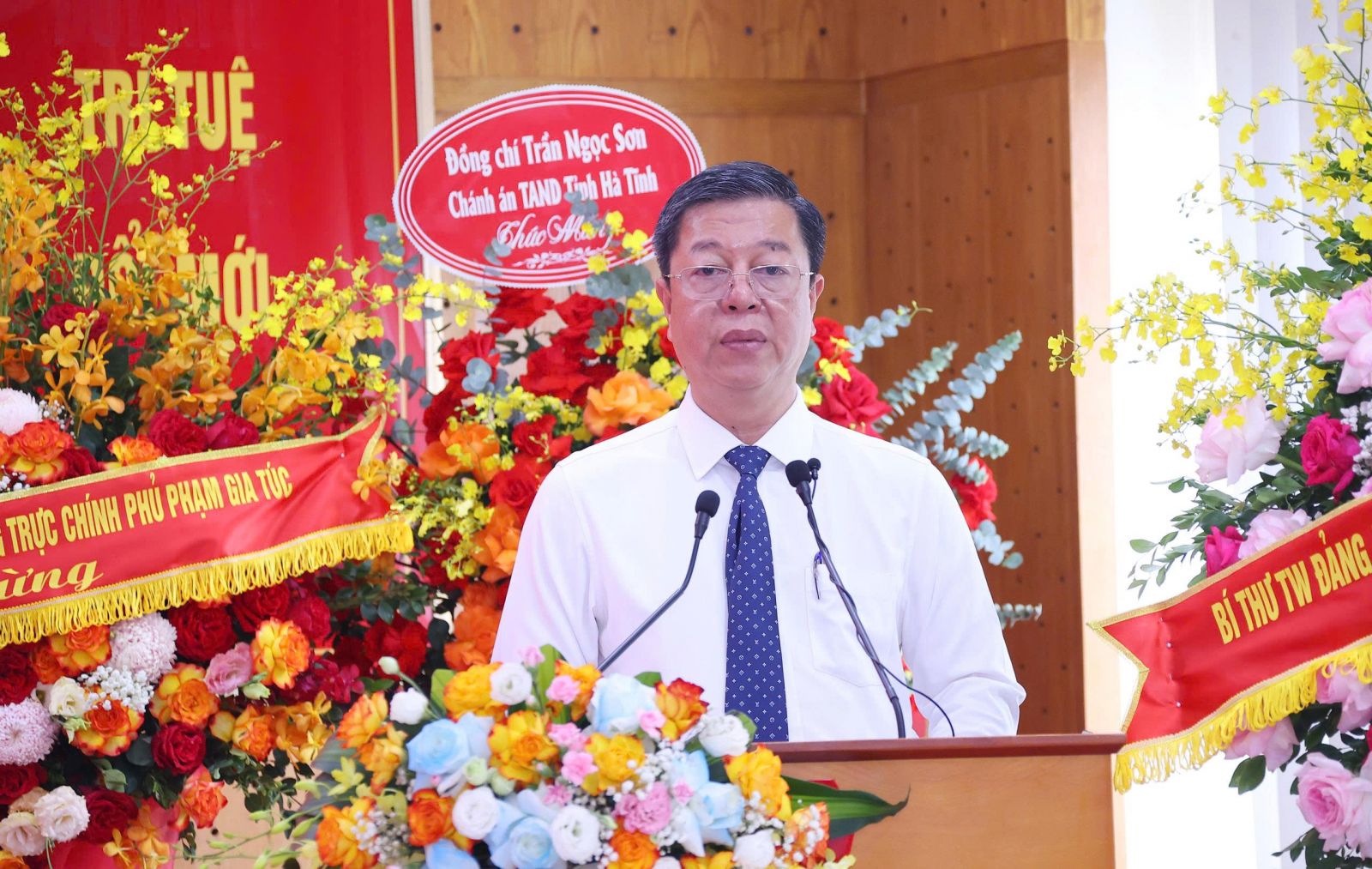
Assoc. Prof. Dr. Vu Trong Lam, Director - Editor-in-Chief of the National Political Publishing House Truth.
General Secretary and President To Lam emphasized that, given the rampant spread of fake news on social media, which damages the reputation of individuals and organizations and even affects the people's trust in the policies of the Party and the State, the press must be a place where people turn to for reliable confirmation, not a place that blindly follows trends. According to the Associate Professor, how should the press and media innovate their approach, content, and presentation to effectively fulfill this task, especially for the younger generation and the digital community?
In the current context, protecting the Party's ideological foundation in cyberspace cannot be limited to refuting false and hostile viewpoints; more importantly, it must ensure that the Party's correct, positive, and progressive values permeate social life, especially among the younger generation.
To achieve this, the press and media need to innovate in three major directions: Firstly , they must shift from a "reactive" mindset to a "proactive" mindset. Instead of waiting for false information to appear before refuting it, they must proactively provide accurate, timely, and transparent information, helping the public to discern right from wrong, truth from falsehood.
In short, the central task of journalism is not only to combat falsehood, but also to make truth more persuasive and appealing, spreading it more widely. When official information becomes the most reliable source of reference for society, and when positive values become the dominant trend in cyberspace, that is when journalism best fulfills its pioneering role in protecting the Party's ideological foundation.
Secondly , we must shift from rigid, dry communication methods to persuasive and impactful ones that resonate with society, reaching every cadre, Party member, and citizen. Theoretical and political issues need to be expressed in modern, accessible language, relevant to the concerns of the people and young people. To protect the Party's ideological foundation, we must first ensure that the people understand, believe in, and support it.
Thirdly , there must be a strong presence on digital platforms. If the public, especially young people, are receiving information on social media, digital platforms, and mobile devices, then revolutionary journalism must also innovate to reach the public in those same spaces with vivid, engaging, and appropriate forms of expression.
The measure of effectiveness in protecting the Party's ideological foundation today is not just refuting false information, but more importantly, building trust, social consensus, and inspiring the younger generation about the path of national development. That is the enduring strength of revolutionary journalism in the digital age.
Based on the strategic directions of General Secretary and President To Lam, according to the Associate Professor, what are the most urgent requirements for journalists today?
I believe the most important message that General Secretary To Lam conveyed to the revolutionary press today is: In a rapidly changing world, the press must innovate strongly, but the more it innovates, the more it must maintain its revolutionary nature.
Therefore, the most urgent requirement for today's journalists is not simply to learn a new technology or master a new digital platform, but first and foremost to uphold political integrity, social responsibility, and their professional mission. Because in an era where true and false information are intertwined, the core value that makes revolutionary journalism strong remains trust. And trust can only be earned when journalists possess integrity, intelligence, and professional ethics.
Journalists today must adapt to the digital media environment. Artificial intelligence, big data, and new technological platforms are no longer trends of the future, but have become tools of the present. Without mastering technology, journalism will struggle to maintain its leading role; but if it only chases technology while neglecting the core values of journalism, it will also be difficult to fulfill its mission.
Journalists in today's era need to possess a clear mind, a pure heart, a sharp pen, and a digital mindset, along with the capacity for innovation and creativity. Journalists must not only reflect reality but also contribute to shaping public awareness, building trust, spreading aspirations for development, and inspiring a spirit of dedication throughout society.
The era of national resurgence is placing new demands on revolutionary journalism. To become a vanguard force on the ideological and cultural front, every journalist must constantly renew themselves. Because ultimately, the strength of journalism lies not only in technology or media platforms, but in the quality of the journalists themselves and the values they serve.
Thank you very much, sir!
According to VNA

Comments