



When the book "Stories with Thanh - A New Account of Light" was penalized for serious errors, the lesson for publishers is the need to review their review and editing processes.
Publishers are the "gatekeepers of knowledge".
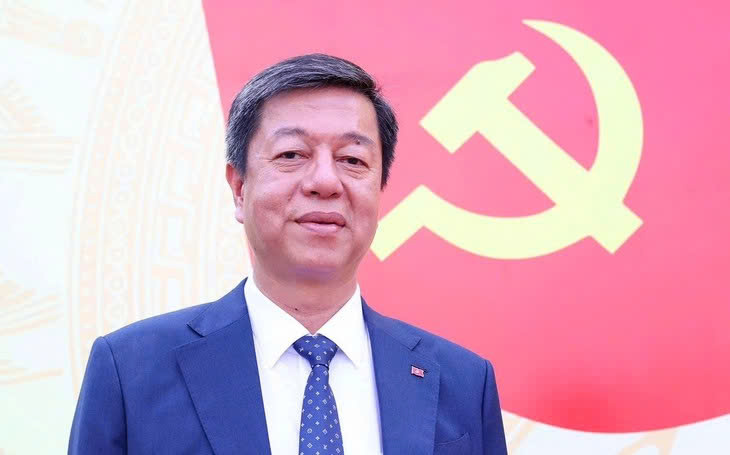
Associate Professor Dr. Vu Trong Lam, Director and Editor-in-Chief of the National Political Publishing House. Photo: Van Diep - VNA.
Tuoi Tre newspaper interviewed Associate Professor Dr. Vu Trong Lam, Director and Editor-in-Chief of the National Political Publishing House, about the work of book review and editing.
Mr. Lam affirmed that in the era of information explosion, the core competitive advantage of a publishing house lies not only in the speed or quantity of book titles, but first and foremost in its reputation, reliability, and the quality of knowledge it provides to society.
*What is the rigorous review and editing process for publishing a book at the National Political Publishing House?
- The National Political Publishing House is a central Party organization, under the direct and regular leadership of the Party Secretariat, functioning as the core political and theoretical publishing agency of the Party and the State. Therefore, the editing and publishing process is carried out very rigorously and places high demands on all three aspects: political, scientific, and legal.
From the manuscript preparation stage, we conduct an assessment of the necessity, theoretical and practical value, target audience, and social impact of the publication. For important and complex manuscripts, the publishing house organizes consultations and evaluations with experts, scientists, relevant agencies, and professional advisory councils.
During the editing process, editors not only perform the functions of correcting language and presentation techniques but also must verify the source of materials, cross-reference documents and materials of the Party and State, and relevant scientific data. Every important piece of information must be verified to ensure accuracy, objectivity, and standardization.
After professional editing, the manuscript undergoes further rounds of proofreading and content review before being submitted to the publishing house's leadership for consideration and publication. For many particularly important books, the publishing house also seeks opinions from competent authorities to ensure the accuracy, reliability, and direction of the publication.
It can be said that the editing and publishing process is built on many rigorous, objective, and independent steps to ensure that each book reaching the reader meets the highest requirements in terms of content quality, scientific accuracy, educational value, and social responsibility.
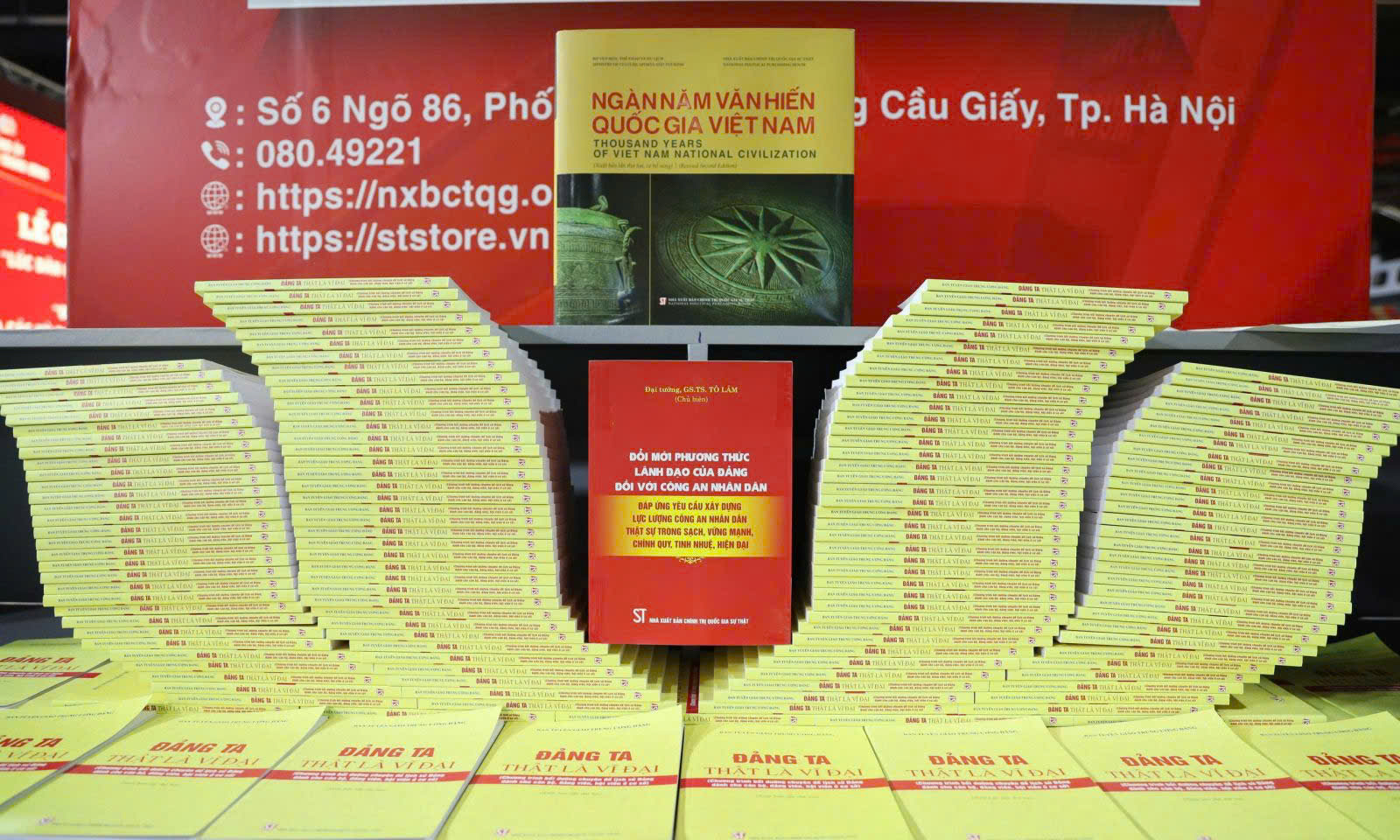
These books were published by the National Political Publishing House. Photo: Publishing House.
* Given the many challenges facing the publishing industry today, what advice would you give to your colleagues?
Today, the rapid development of digital technology, artificial intelligence, social networks, and multi-platform media environments is profoundly changing the way knowledge is produced, distributed, and received. The pressure to publish quickly is increasing, while the demands for quality, accuracy, and reliability of information and knowledge are also rising.
In my opinion, the most important thing for publishing houses today is to uphold professional integrity and social responsibility. Technology can assist humans in many stages, but it cannot replace the role of editors and proofreaders as "gatekeepers of knowledge," ensuring the quality and value of publications.
Recently, some publications have contained errors in historical, ideological, and political content. The current requirement for publishing houses is to further enhance their capacity for evaluating, critically reviewing, and verifying information, as well as identifying political and ideological risks in each manuscript.
Every editor and manager in the publishing industry must truly be a "gatekeeper" with strong political conviction, professional expertise, and a high sense of responsibility for every word and every document included in a publication.
For topics related to Party history, national history, national sovereignty, Party and State leaders, theoretical and political issues, or sensitive and complex issues, special attention should be paid to multi-round review, soliciting opinions from relevant agencies, scientists, and experts in the field, and comparing them with official and highly reliable sources.
We cannot, due to deadline pressures, economic interests, or market competition, disregard the requirements for accuracy, scientific rigor, and the guiding principles of publications.
* Recently, the most pirated books have come from collaborations between the publishing house and other individuals or entities. How does the National Political Publishing House handle this type of book to ensure quality?
- The publishing partnership model is not the cause of the violations. Publishing partnerships are a policy that contributes to mobilizing social resources, discovering valuable manuscripts, and expanding the ability to bring knowledge to readers.
The core problem lies in the fact that some publishing houses have relaxed their role, viewing publishing partnerships as merely economic cooperation, and failing to fully fulfill their responsibilities in evaluating, editing, proofreading, and controlling the quality of content.
The National Political Publishing House has always maintained that publishing partnerships do not equate to the transfer of responsibility to the partner. The ultimate responsibility for each published book remains with the Publishing House.
Therefore, whether the manuscript is directly produced by the organization or proposed by a partner, all must go through a review, editing, and proofreading process according to established procedures with high political, ideological, scientific, and legal requirements. The National Political Publishing House only decides to publish manuscripts that have been fully reviewed and evaluated by our editorial team and proofreading levels and are guaranteed to meet quality standards.
In particular, for manuscripts containing content related to national history, Party history, Party and State leaders, national sovereignty, political and ideological issues, or complex and sensitive issues, it is essential to organize assessments and gather opinions from experts, scientists, and relevant authorities before deciding to publish them.
We not only control the content, but also directly manage key stages in the publishing process, including printing and distribution. Simultaneously, proofreading, sample printing, and final product acceptance are all rigorously conducted to ensure that the book released to the public is completely consistent with the approved manuscript.

These books were published by the National Political Publishing House. Photo: Publishing House.
If a book contains errors, who is responsible?
A representative from the Department of Publishing, Printing and Distribution stated that Article 5 of the 2012 Publishing Law affirms the principle that the State does not censor works before publication.
Articles 14, 18, and 19 stipulate the responsibilities of the governing body, the head of the publishing house, the editor-in-chief, and editors; Article 23 stipulates the responsibilities of the publishing house in joint publishing activities; and Articles 28 and 29 regulate the submission and verification of copyright registration.
Therefore, direct responsibility for the content of published works rests with the publishing house, the head of the publishing house, the editor-in-chief, and the editors. State management agencies perform the functions of management, inspection, supervision, and handling of violations in accordance with the law.
From a legal perspective, in my opinion, the biggest lesson is that publishers cannot consider the editing and review process as merely a technical procedure. For books related to history, leaders, political figures, and revolutionary events, the requirements are not just about writing style or original ideas, but first and foremost, accuracy, adherence to standards, and independent verification.
The 2012 Publishing Law prohibits the publication of works that distort historical facts, insult the nation, national figures, national heroes, or damage the reputation of organizations, honor, and dignity of individuals.
At the same time, the Director of the Publishing House must approve the manuscript before printing, sign the publishing decision, the distribution decision, and be legally responsible for the publication; the editor-in-chief is responsible for organizing the editing, proofreading, and approval of the content. This is a direct legal responsibility and cannot be entirely shifted to the author.
From a management perspective, I believe that publishers should establish their own review mechanisms for sensitive books, invite independent experts, maintain editorial records, and refrain from publishing books if there are doubts about their authenticity.
Lawyer Hoang Ha (Ho Chi Minh City Bar Association)
According to THIEN DIEU - DAU DUNG ( Tuoitre.vn)
See the original article on Tuoi Tre Online: https://tuoitre.vn/print/nguoi-lam-xuat-ban-la-nguoi-gac-cong-tri-thuc-100260625101955321.htm

Comments