



Science and technology, innovation, and digital transformation are becoming crucial drivers of national development in the new era. In this context, publications by the National Political Publishing House offer readers up-to-date perspectives on scientific knowledge, digital transformation, and technological trends shaping the future development of the country.
Read to keep pace with and master technology in the digital age.
In the context of the Fourth Industrial Revolution unfolding rapidly globally, science and technology, innovation, and digital transformation are no longer just trends of the future but have become direct drivers of economic growth, enhancing national competitiveness and reshaping many aspects of social life. From artificial intelligence (AI), big data, the Internet of Things to the digital economy, digital government, and digital society, technological achievements are creating profound changes in how people produce, manage, learn, and connect.
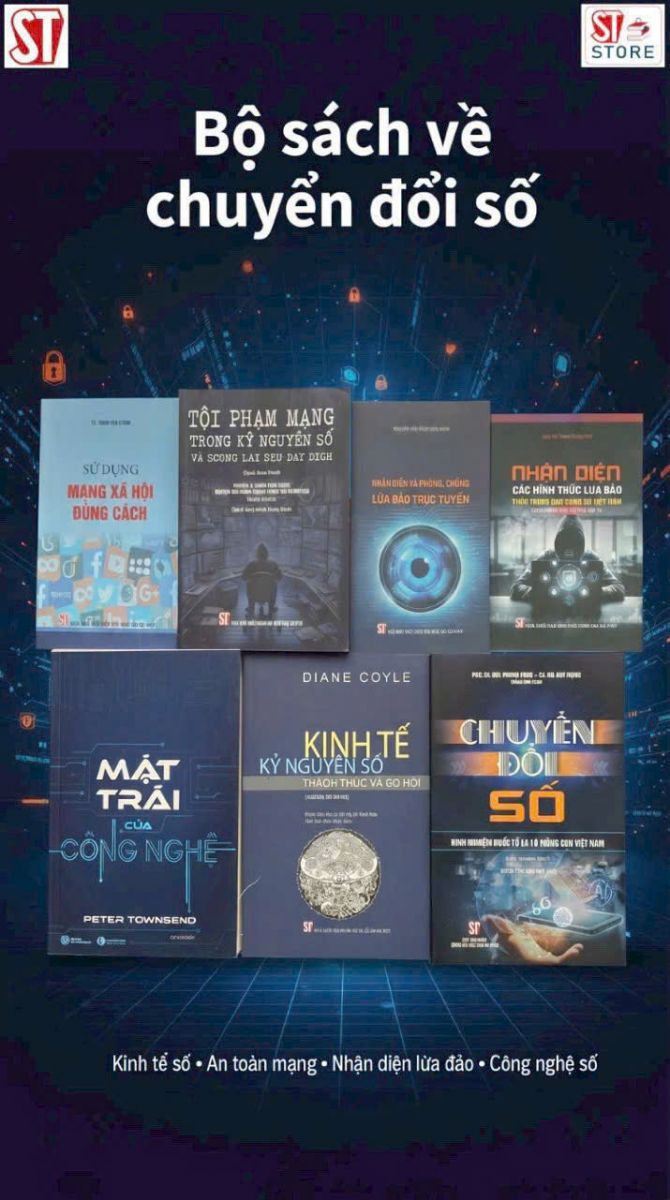
The series of books on digital transformation, digital security, and the digital economy published by the National Political Publishing House provides a wealth of useful knowledge about technology, digital culture, cybersecurity, and the challenges facing the current digital age.
In Vietnam, the Party and State have identified the development of science and technology, innovation, and digital transformation as key factors in realizing the aspiration for rapid and sustainable national development. The Resolution of the 14th National Congress of the Party further affirms the particularly important role of this field by emphasizing the need to accelerate breakthroughs in science, technology, innovation, and digital transformation, while identifying science, technology, innovation, and digital transformation as the main driving force for national development in the new period. The documents of the 14th Congress also emphasize the need to establish a new growth model based on knowledge, data, technology, and high-quality human resources, considering this as the foundation for developing new productive forces, improving productivity, quality, efficiency, and competitiveness of the economy.
Over the years, the National Political Publishing House has compiled, translated, and published numerous in-depth publications on science and technology, innovation, and digital transformation, offering readers rich perspectives ranging from theory and policy to the practical development of technology today. The content of these publications is rich and diverse, providing a scientific basis and arguments for the national industrialization, modernization, and digital transformation process; opening up new perspectives on artificial intelligence, the digital economy, new productive forces, and growth models in the digital age; or focusing on practical issues such as AI application skills, information security, online fraud detection, and online etiquette…
The monograph " Industrialization and Modernization of the Country on the Foundation of Science, Technology and Innovation," co-edited by Prof. Dr. Tran Thi Van Hoa and Assoc. Prof. Dr. Do Thi Dong, not only systematizes the theoretical basis of industrialization and modernization in the new context but also delves into the transformations of Vietnam over more than three decades of reform, from 1990 to 2023. Through assessing the current state of scientific and technological development, innovation capacity, human resource quality, and the ability to participate in global value chains, the authors identify opportunities and challenges and propose numerous solutions to create breakthroughs in national development during the digital transformation and knowledge-based economy era.
From a broader perspective on national digital transformation, the book " Digital Transformation - International Experiences and a Roadmap for Vietnam," co-edited by Assoc. Prof. Dr. Bui Quang Tuan and Dr. Ha Huy Ngoc, provides a comprehensive picture of the process of building a digital government, digital economy, and digital society. The book not only synthesizes experiences from many countries around the world but also analyzes the practical aspects of digital transformation in Vietnam, thereby proposing policy recommendations and a roadmap suitable to the country's development conditions. In the context of digital transformation profoundly impacting all sectors, from state administration and production and business to education, healthcare, and social life, this is a useful reference for managers, businesses, and readers interested in Vietnam's digital future development.
Continuing the theme of innovation in growth models in the technological age, the book " Developing New Productive Forces for Breakthroughs in the Digital Age" by Associate Professor Dr. Vu Thanh Son focuses on clarifying one of the issues currently under concern: the formation of new productive forces under the impact of science, technology, and globalization. The book analyzes the role of data, digital technology, artificial intelligence, and high-quality human resources in creating new growth drivers; and introduces many noteworthy experiences from countries such as Germany, the United States, Japan, South Korea, and China. Through this, the author suggests many solutions to promote innovation in growth models, improve labor productivity, and enhance the competitiveness of the Vietnamese economy in the digital age.
From a cultural and human perspective in the digital environment, the book " Identifying Culture in the Digital Space," co-edited by Assoc. Prof. Dr. Vu Trong Lam and Dr. Nguyen Viet Lam, opens up many new perspectives on the formation and development of digital culture in the context of comprehensive digital transformation. The book clarifies concepts such as digital culture, digital citizenship, and the digital cultural environment; and analyzes new manifestations of digital interaction culture, digital content creation culture, digital consumption culture, and digital ethics in modern life. Through a combination of theoretical research and references to international experience, the authors offer many practical suggestions for building a healthy digital cultural environment, contributing to strengthening Vietnam's soft power in the technological age.
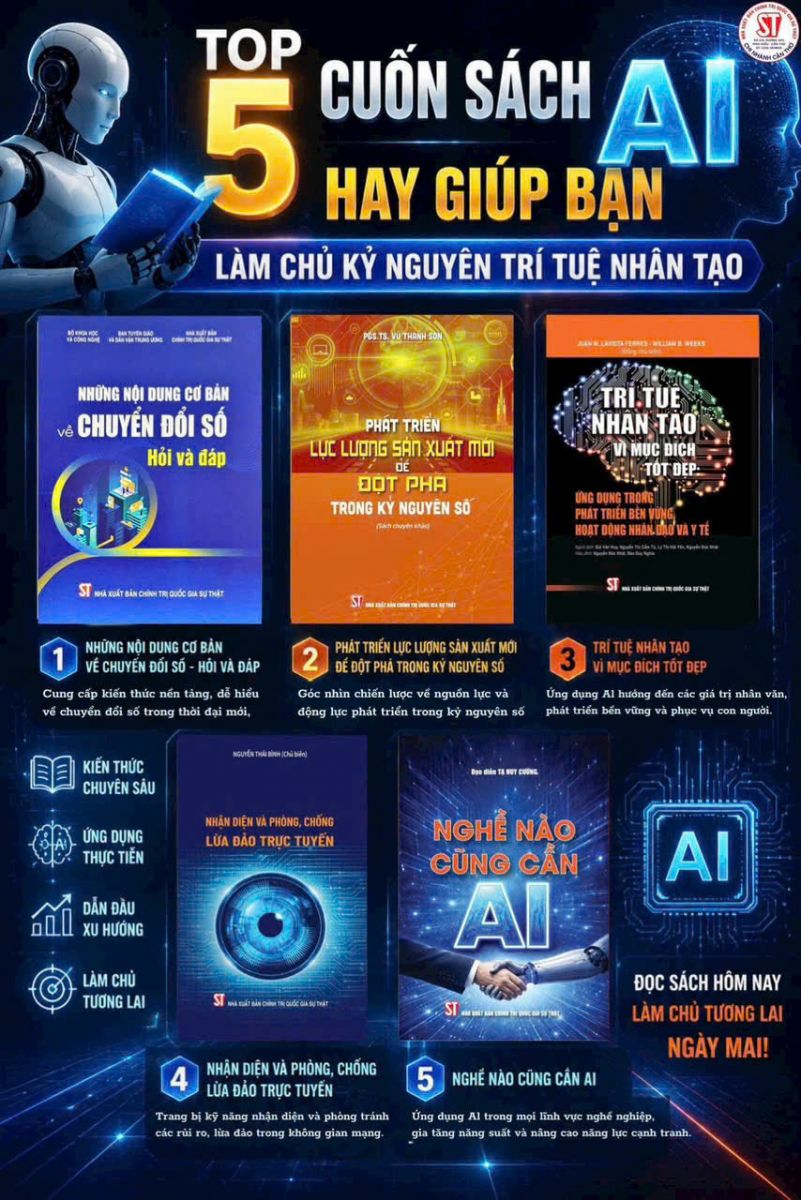
These five outstanding books on artificial intelligence, digital transformation, and digital skills, published by the National Political Publishing House, offer practical perspectives to help readers master technology and adapt to the AI era.
Instead of focusing on macro-level digital development and transformation strategies, many books research the application of science, technology, and artificial intelligence in specific fields. The translated book, " Artificial Intelligence for Good: Applications in Sustainable Development, Humanitarian Activities, and Healthcare," offers a humanistic perspective on AI technology. Co-edited by Juan M. Lavista Ferres and William B. Weeks, this work demonstrates that artificial intelligence not only serves economic growth but can also help solve many global problems such as healthcare, disaster response, poverty reduction, education, and sustainable development. From the perspective of the Vietnamese publishing industry, the book " Electronic Publishing, Digital Publishing in Vietnam in the Context of the Fourth Industrial Revolution," edited by Assoc. Prof. Dr. Vu Trong Lam, provides a comprehensive overview of the publishing industry's transformation in the digital age. From systematizing theoretical issues concerning electronic and digital publishing to researching international experiences and analyzing the current situation in Vietnam, this book helps readers clearly identify the opportunities, challenges, and innovation requirements for publishing activities today. The work not only contributes to supplementing the theoretical and practical foundations for the development of the digital publishing industry in Vietnam but also suggests many solutions to build the publishing industry into a modern cultural industry in the digital age.
Through numerous specific case studies, the book helps readers understand how AI is being applied in daily life, from climate change forecasting and resource management to humanitarian aid and improved healthcare efficiency. Besides highlighting the potential of AI, the book also raises ethical issues, social responsibility, and the need for policy development to ensure the technology is used transparently, fairly, and for the benefit of humanity. With its scientific yet accessible content, this is a useful resource for managers, researchers, students, and readers interested in the future of sustainable development in the age of artificial intelligence.
Meanwhile, director Ta Huy Cuong's book, "Every Profession Needs AI," offers a more accessible, practical, and easily applicable approach. The book demonstrates that AI is no longer a technology exclusive to the technical field but is gradually becoming a common support tool in many professional areas, from media, education, business, content creation to administrative management. With its concise writing style and vivid real-world examples, the book helps readers better understand how to leverage AI to improve work efficiency, innovate thinking, and adapt to a rapidly changing work environment.
Beyond focusing on technology and innovation, the National Political Publishing House also introduces many practical publications on digital safety and cybersecurity skills in the era of comprehensive digitalization. Two books, " Identifying Forms of Online Fraud in Vietnam - Prevention and Risk Management" by Lawyer Pham Thanh Huu and " Identifying and Preventing Online Fraud" edited by Nguyen Thai Binh, provide readers with useful knowledge to recognize increasingly sophisticated online scams. From fake messages, calls, and malicious links to digital financial fraud and personal data theft, the books present numerous real-life scenarios and necessary preventative skills to enhance people's "digital resilience."
From the perspective of digital skills and online etiquette, Dr. Pham Van Phong's book, " Using Social Media Properly, " helps readers, especially young people, acquire skills to use social media in a civilized, safe, and responsible manner; thereby improving their ability to identify harmful and toxic information, behave appropriately in cyberspace, and protect themselves from risks in the digital environment.
Besides the opportunities that technology brings, many works also help readers better understand the challenges of the digital age. Peter Townsend's book, * The Dark Side of Technology*, offers a critical perspective on the consequences that technology can have on the environment, health, culture, and social life. From climate change and environmental pollution to dependence on digital devices and the impact of social media on human psychology, the book prompts much reflection on humanity's responsibility in developing and using technology sustainably.
The book "Cybercrime in the Digital Age and the Post-Pandemic Future," co-edited by Russell G. Smith, Rick Sarre, Lennon Yao-Chung Chang, and Laurie Yiu-Chung Lau (translated by Dinh Trong Minh), offers an in-depth perspective on non-traditional security challenges in the digital age. The COVID-19 pandemic and the explosion of the online environment have facilitated the increase of cybercrime with increasingly sophisticated methods, ranging from online fraud and data theft to high-tech extortion. Through research and analysis by numerous reputable scholars and experts, the book not only explains the transformations of cybercrime during and after the pandemic but also suggests many solutions to improve the effectiveness of preventing and controlling cybersecurity risks in this new context. With its topical relevance and multi-faceted approach, the book is a useful reference for researchers, managers, policymakers, and readers interested in cybersecurity and digital safety today.
Notably, Diane Coyle's book, *The Digital Economy: Challenges and Opportunities * – which won the Financial Times ' Best Economics Book of 2021 – offers many new perspectives on economics in the digital age. The book not only analyzes changes in the economic structure under the impact of technology but also raises many thought-provoking issues about growth, social equity, public welfare, and the role of the state in the digital economy. Through this, the book helps readers better understand the opportunities and challenges that technology poses to national governance and sustainable economic development in the 21st century.
Through its extensive publication system on science and technology, innovation, and digital transformation, the National Political Publishing House not only contributes to the dissemination of knowledge but also provides readers with up-to-date perspectives on technological trends, development models, and emerging issues in the digital age. From strategic research papers to books relevant to real life, these publications contribute to raising digital awareness, fostering innovative thinking, and helping readers more effectively access the movements shaping the country's future development in the technological era.

Comments