



On the morning of May 26, 2026, in the city of Hai Phong, a national scientific seminar themed “Innovating the National Development Model Based on Science, Technology, Innovation, and Digital Transformation” was jointly organized by the Central Committee’s Policy and Strategy Department, the Ho Chi Minh National Academy of Politics, the Central Theoretical Council, the Hai Phong City Party Committee, the Communist Review, the National Political Publishing House, and the Vietnam Economic Association.
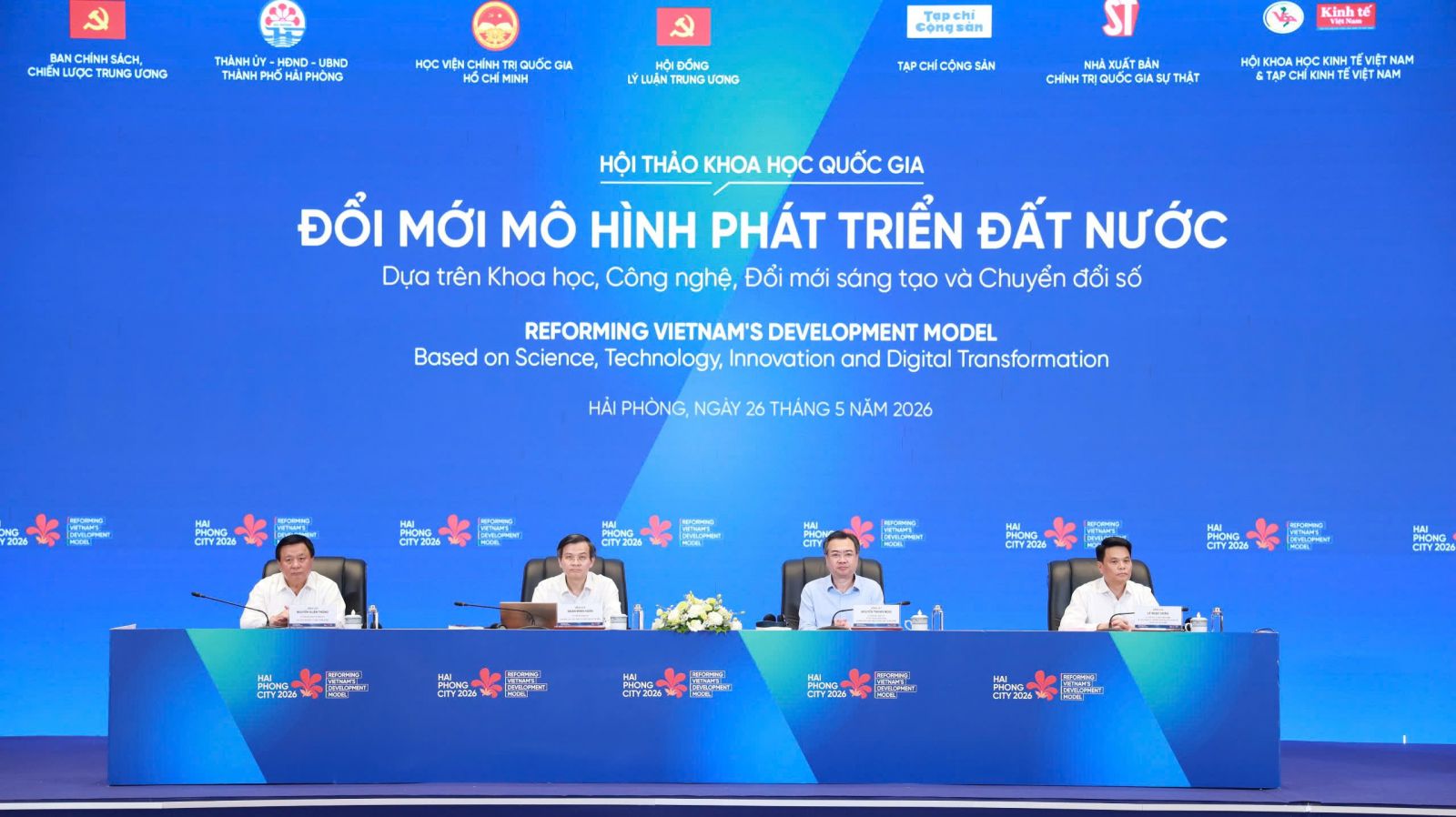
The officials presiding over the seminar.
The seminar was presided over by the following officials: Nguyen Thanh Nghi, Member of the Politburo, Secretary of the Party Central Committee, and Head of the Central Commission for Policy and Strategy; Doan Minh Huan, Member of the Politburo and Director of the Ho Chi Minh National Academy of Politics; Nguyen Xuan Thang, Member of the Politburo (13th tenure) and Chairman of the Central Theoretical Council; and Le Ngoc Chau, Member of the Party Central Committee and Secretary of the Hai Phong City Party Committee.
Representing the National Political Publishing House "Truth" (Nha xuat ban Chinh tri quoc gia Su that) at the seminar were Assoc. Prof. Dr. Vu Trong Lam, Director and Editor-in-Chief, along with other members of the Publishing House’s leadership team.
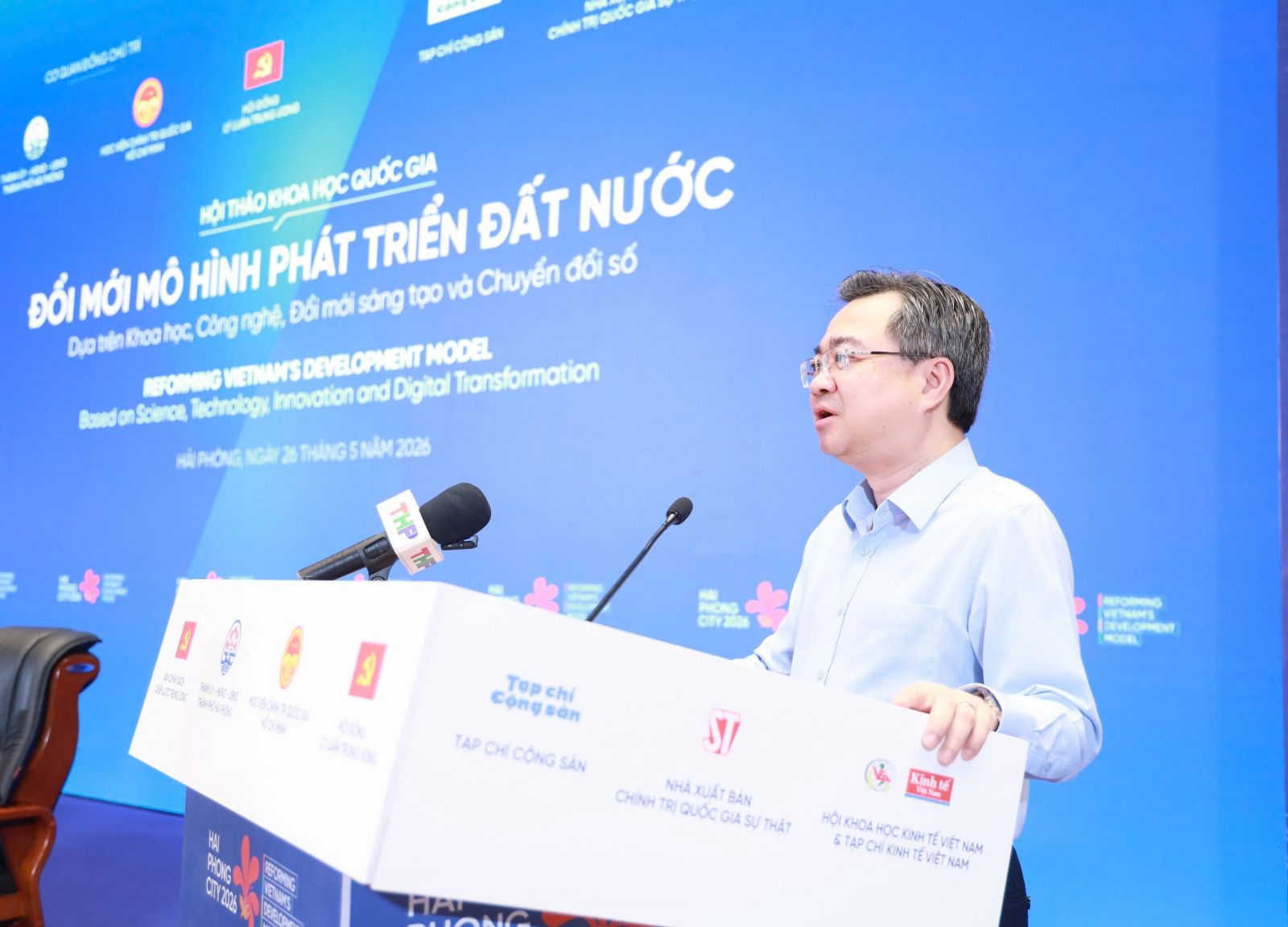
Comrade Nguyen Thanh Nghi, member of the Politburo, Secretary of the Party Central Committee, and Head of the Central Commission for Policy and Strategy, delivered the opening remarks at the seminar.
In accordance with the Action Program of the Party Central Committee—designed to implement the Resolution of the 14th National Party Congress—and pursuant to the mandate assigned by the Politburo, the Central Commission for Policy and Strategy is currently leading the development of a proposal on transforming the nation’s development model. This model is to be anchored in science, technology, innovation, and digital transformation. The proposal is slated for submission to the Third Plenum of the 14th Party Central Committee. This seminar has been organized to provide the foundational arguments and rationale necessary for the development of this significant proposal.
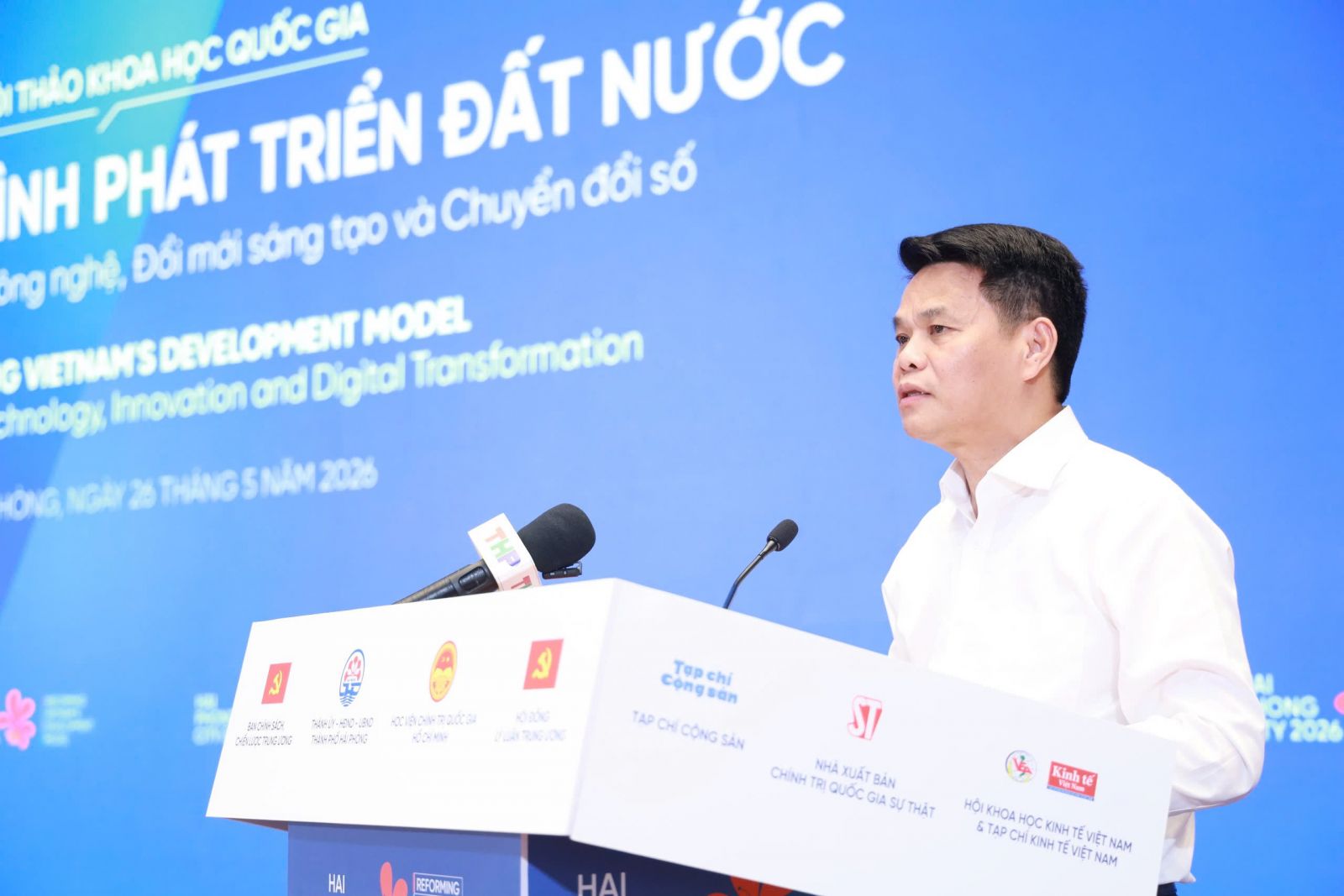
Comrade Le Ngoc Chau, member of the Party Central Committee and Secretary of the Hai Phong City Party Committee, delivered welcoming remarks at the seminar.
The seminar drew nearly 300 delegates, including leaders and representatives from central-level agencies, ministries, and sectors; committees of the National Assembly; the Central Theoretical Council; various localities; research institutes and universities; experts and scientists; international organizations based in Vietnam; as well as journalists from various media outlets.
In the development trajectory of any nation, a development model serves as an overarching framework that guides the organization of the socio-economic system and shapes all aspects of policy planning and implementation. The development experience of many successful nations demonstrates that the capacity to accurately identify timely opportunities—and to proactively transform one’s development model in response to major shifts in technology and the global economic order—is a decisive factor.
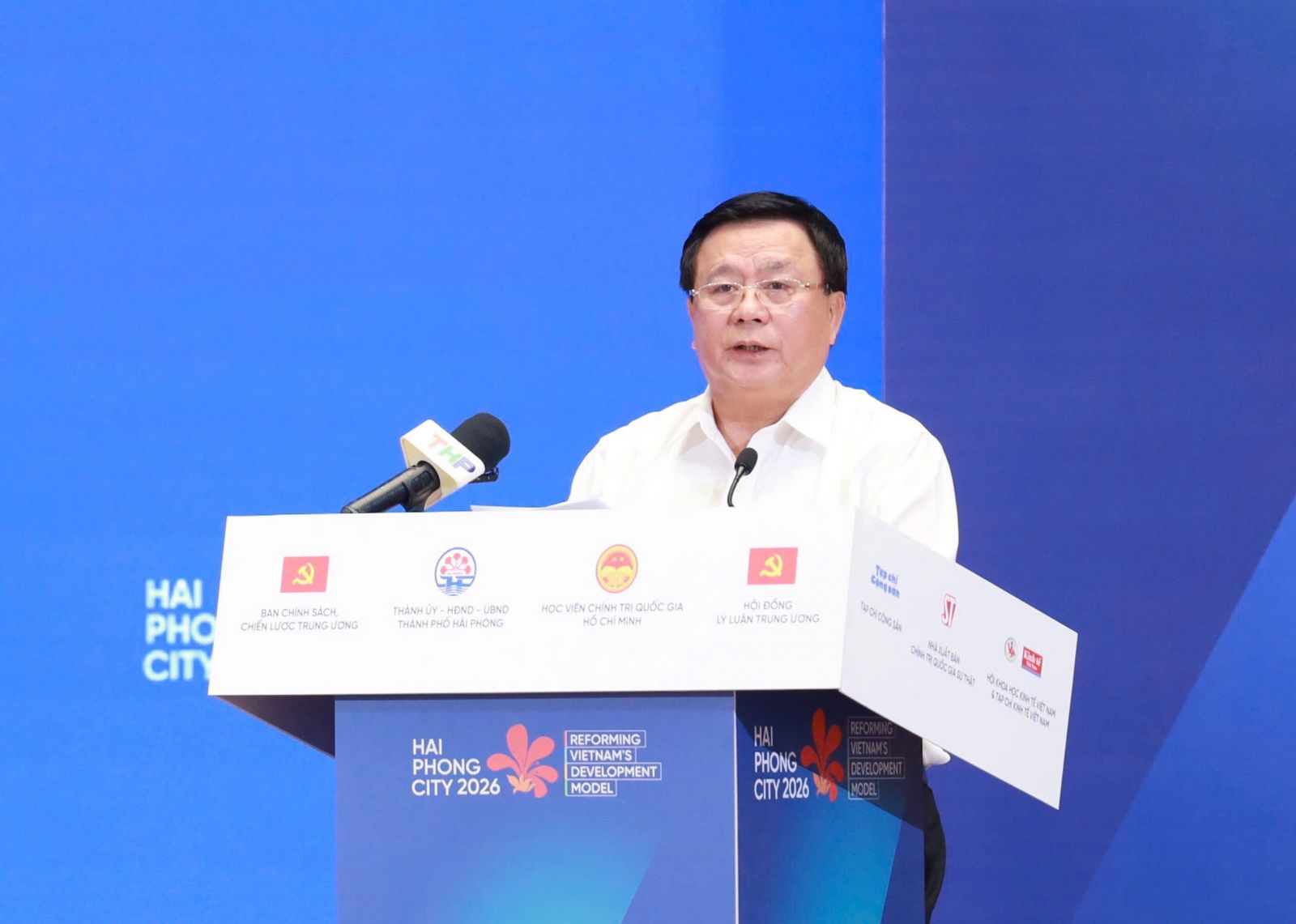
Comrade Nguyen Xuan Thang, member of the 13th Politburo and Chairman of the Central Theoretical Council, delivered the introductory remarks at the seminar.
In Vietnam, the country’s development model has been gradually shaped, supplemented, and refined over various periods. This is consistently reflected in the Party’s documents—most notably the Platform for National Construction in the Period of Transition to Socialism (adopted in 1991, and subsequently supplemented and developed in 2011)—as well as in the documents from various National Party Congresses and numerous significant resolutions and conclusions issued by the Party Central Committee, the Politburo, and the Secretariat. Over the 40 years of implementing the *Doi Moi* (Renewal) process—initiated and led by the Party—the nation has achieved substantial, historically significant accomplishments, establishing a solid foundation for a new phase of development.
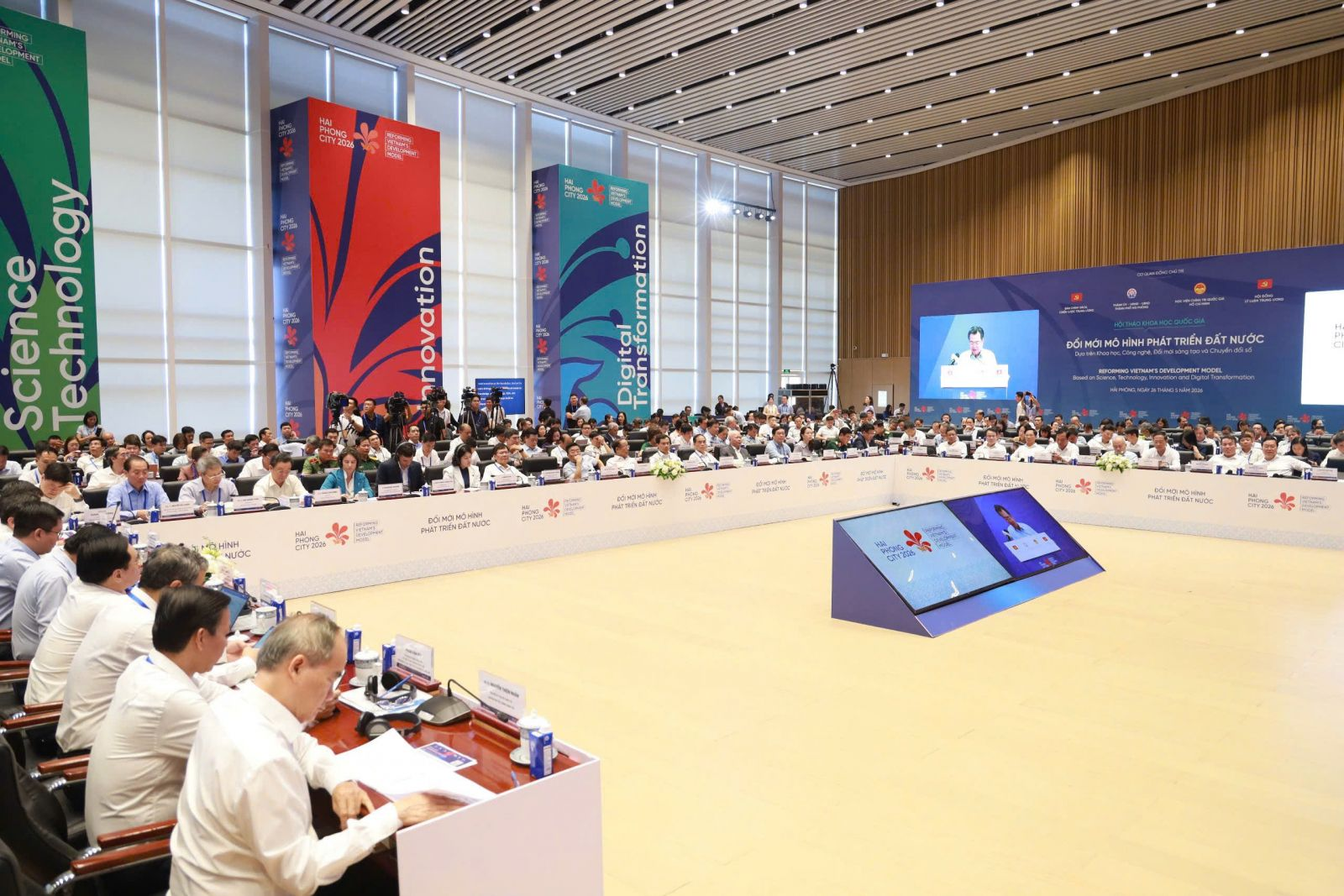

The seminar attracted a large number of delegates, including representatives from central government agencies, ministries, and sectors; local authorities; scientists; and international organizations based in Vietnam.
However, in this new context, the current development model is revealing structural limitations that necessitate fundamental and comprehensive reform. Globally, the Fourth Industrial Revolution—along with breakthroughs in artificial intelligence, big data, cloud computing, and the Internet of Things—coupled with challenges such as climate change, an aging population, and economic instability, presents significant issues that must be addressed. Domestically, the national development model has yet to fully leverage the country’s potential and advantages; economic growth remains largely extensive rather than intensive, lacking sustainability. Furthermore, the economy’s productivity, quality, and competitiveness remain modest, while the application of science, technology, innovation, and digital transformation faces persistent constraints. Issues concerning national governance, the quality of human resources, digital transformation in socio-cultural spheres, green development, the assurance of national defense and security, cybersecurity, and digital sovereignty all underscore an urgent need to reform the nation’s development model.
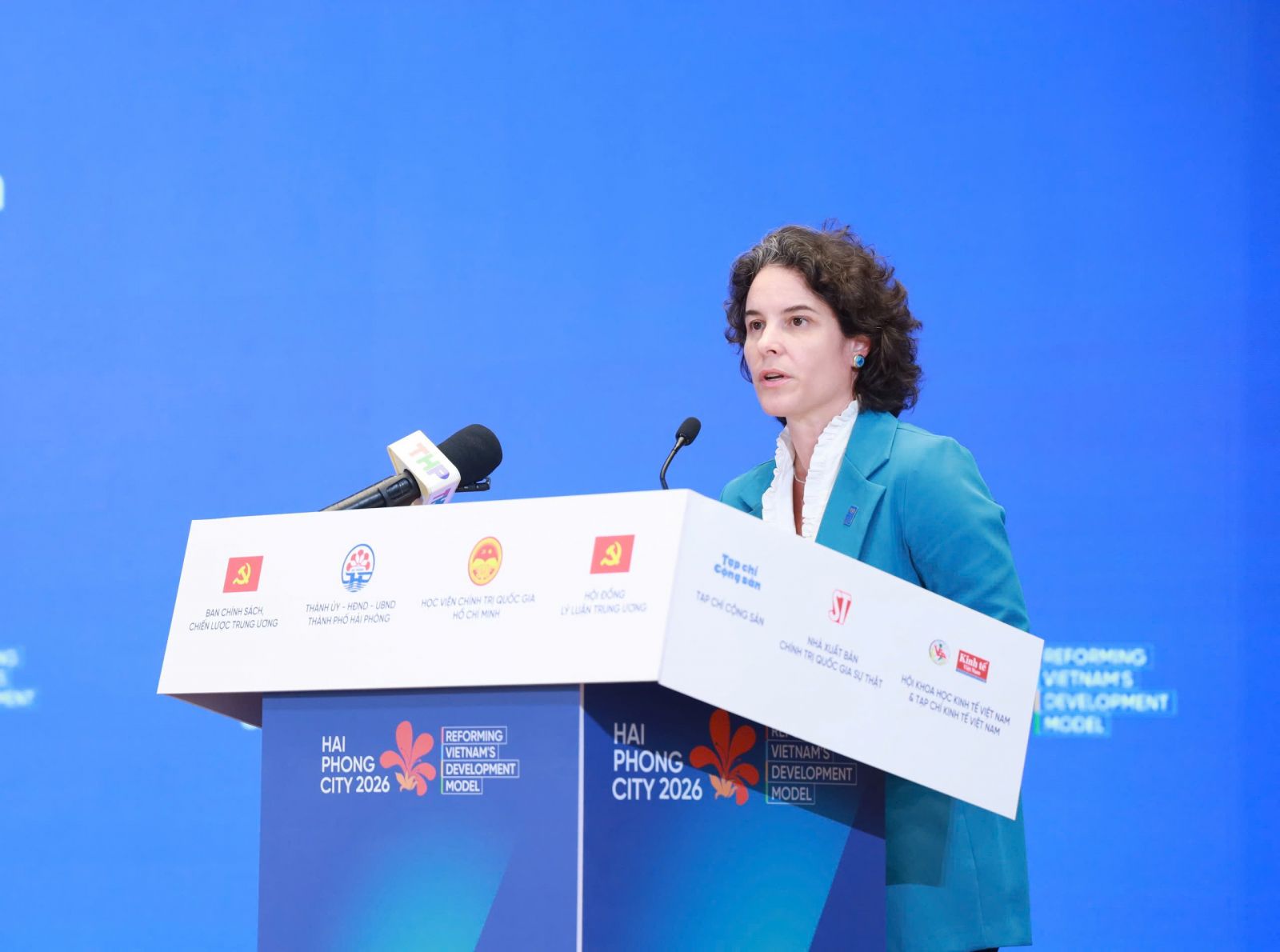
Ms. Francesca Nardini, Deputy Resident Representative of the United Nations Development Programme (UNDP), delivered remarks at the seminar.
With the objective of providing a scientific basis for the development of a proposal on "Innovating the national development model based on science, technology, innovation, and digital transformation," the seminar focused on discussing several key thematic areas:
(i) Clarifying the theoretical foundations and international experiences regarding national development models, as well as the innovation of such models through science, technology, innovation, and digital transformation;
(ii) Clarifying the Communist Party’s guidelines and policies on the national development model over the 40 years of *Doi Moi* (Renewal), as well as the Party’s directives—as outlined in the documents for the 14th National Party Congress—regarding the innovation of the national development model based on science, technology, innovation, and digital transformation (across the sectors of economy, culture, society, national defense, security, environmental protection, foreign affairs, and international integration);
(iii) Assessing the current state of the innovation of Vietnam’s development model over the past 40 years of *Doi Moi*, including achievements, existing issues and limitations, the underlying causes, and lessons learned regarding the innovation of the national development model based on science, technology, innovation, and digital transformation across various sectors.

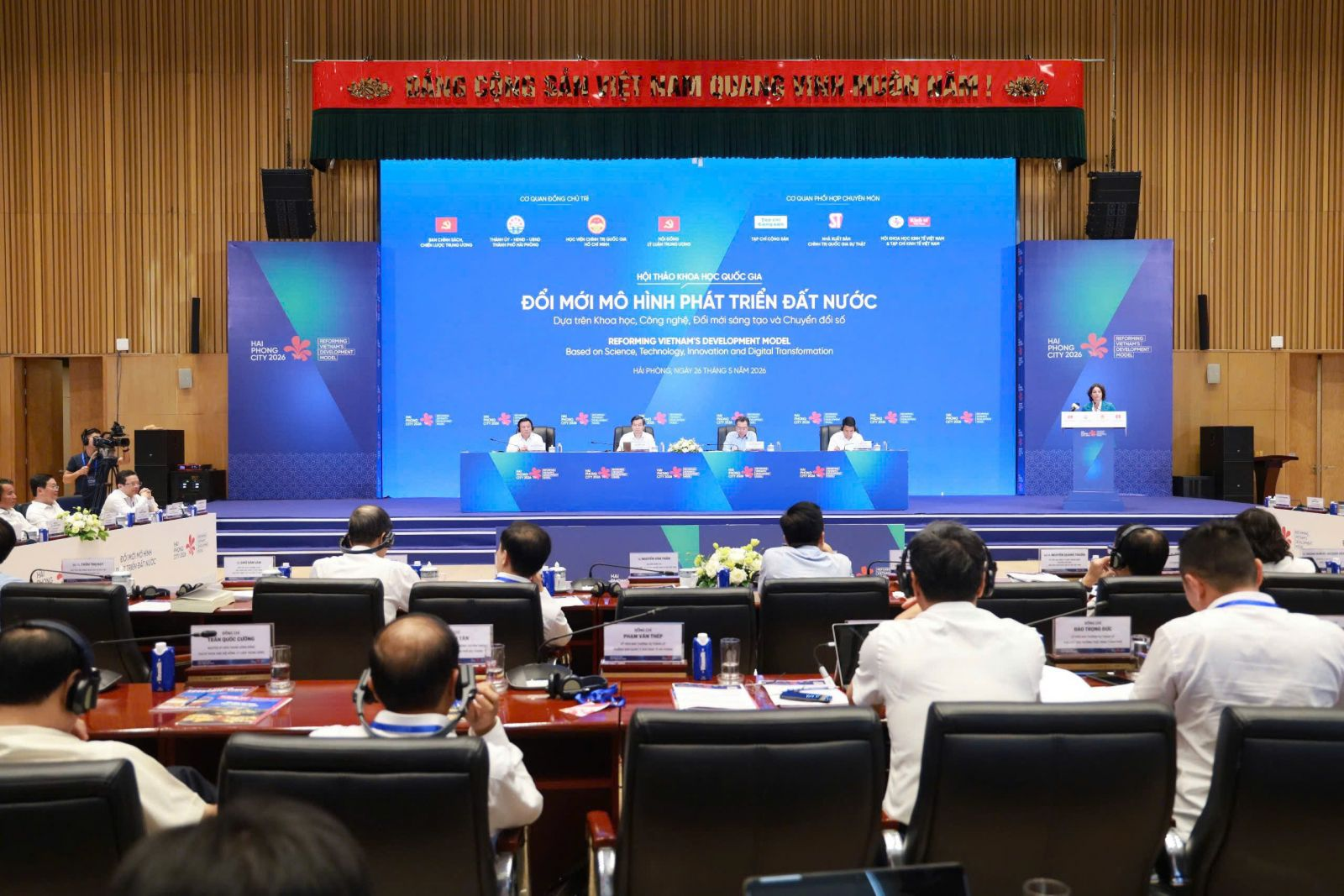
An overview of the national scientific seminar themed “Innovating the National Development Model Based on Science, Technology, Innovation, and Digital Transformation.”
(iv) Clarify the experiences of exemplary localities across the country—including the city of Hai Phong—regarding the innovation of development models; highlight new models and best practices in economic, cultural, social, and environmental development, as well as in ensuring national defense, security, foreign affairs, and international integration, all aimed at achieving rapid, sustainable, and inclusive development;
(v) Analyze the international and domestic context; examine trends, strategic forecasts, and the nation’s development orientation toward 2045;
(vi) Define the core components of the national development model for the 2026–2045 period (covering its philosophy, foundations, pillars, drivers, operational mechanisms, etc.). Propose perspectives, objectives, roadmaps, tasks, and solutions for innovating the national development model—grounded in science, technology, innovation, and digital transformation—to facilitate a successful transition to a new development model, thereby contributing to the realization of the goal for Vietnam to become a developed, high-income nation by 2045.
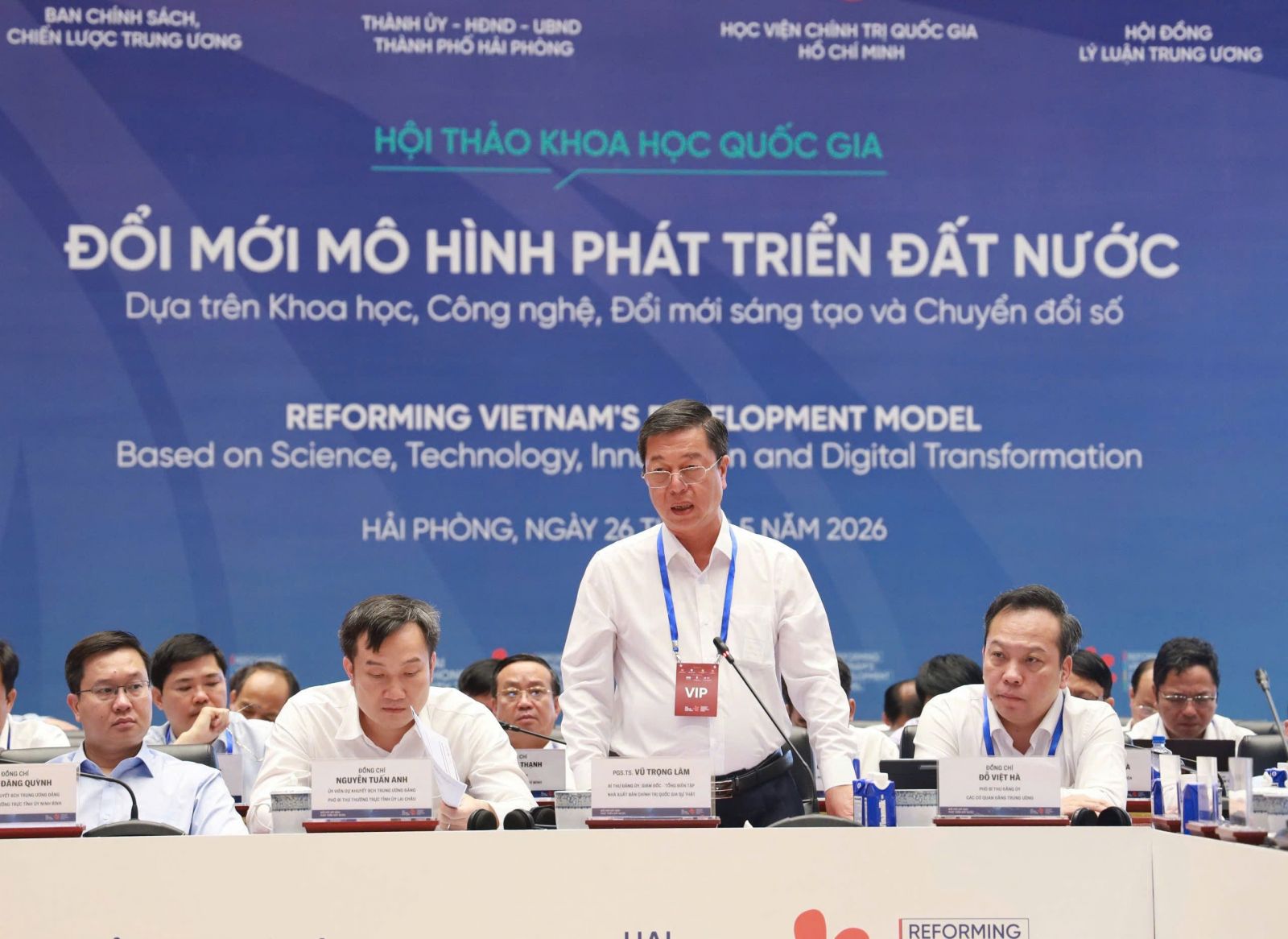
Assoc. Prof. Dr. Vu Trong Lam, Director and Editor-in-Chief of the National Political Publishing House, shared his views during the seminar’s discussion session.
Participating in the discussion, Assoc. Prof. Dr. Vu Trong Lam emphasized that as Vietnam shapes its national development model for a new era, it must focus on addressing three fundamental issues that are critical to the country’s long-term competitiveness.
Specifically, Vietnam needs to fundamentally shift its "national development logic"—moving away from a reliance on natural resources and low-cost labor toward a model driven by knowledge, technology, data, and innovation. This requires breakthroughs in institutional frameworks and national governance capacity to bridge the "gap" between technological advancement and governance, alongside the development of human resources aligned with inclusive digital transformation. He asserted that while a nation can import technology, it cannot import creative capacity; therefore, it is essential to build an innovation ecosystem and a flexible governance model capable of adapting to the rapid evolution of science, technology, and the digital economy.
With the participation of numerous experts, scholars, and policymakers, the organizing committee selected and edited 100 notable papers for inclusion in the seminar proceedings. This scholarly work holds profound theoretical and practical value, offering a collection of key arguments, proposals, and recommendations to support the development of strategic frameworks and long-term national planning for the new era.
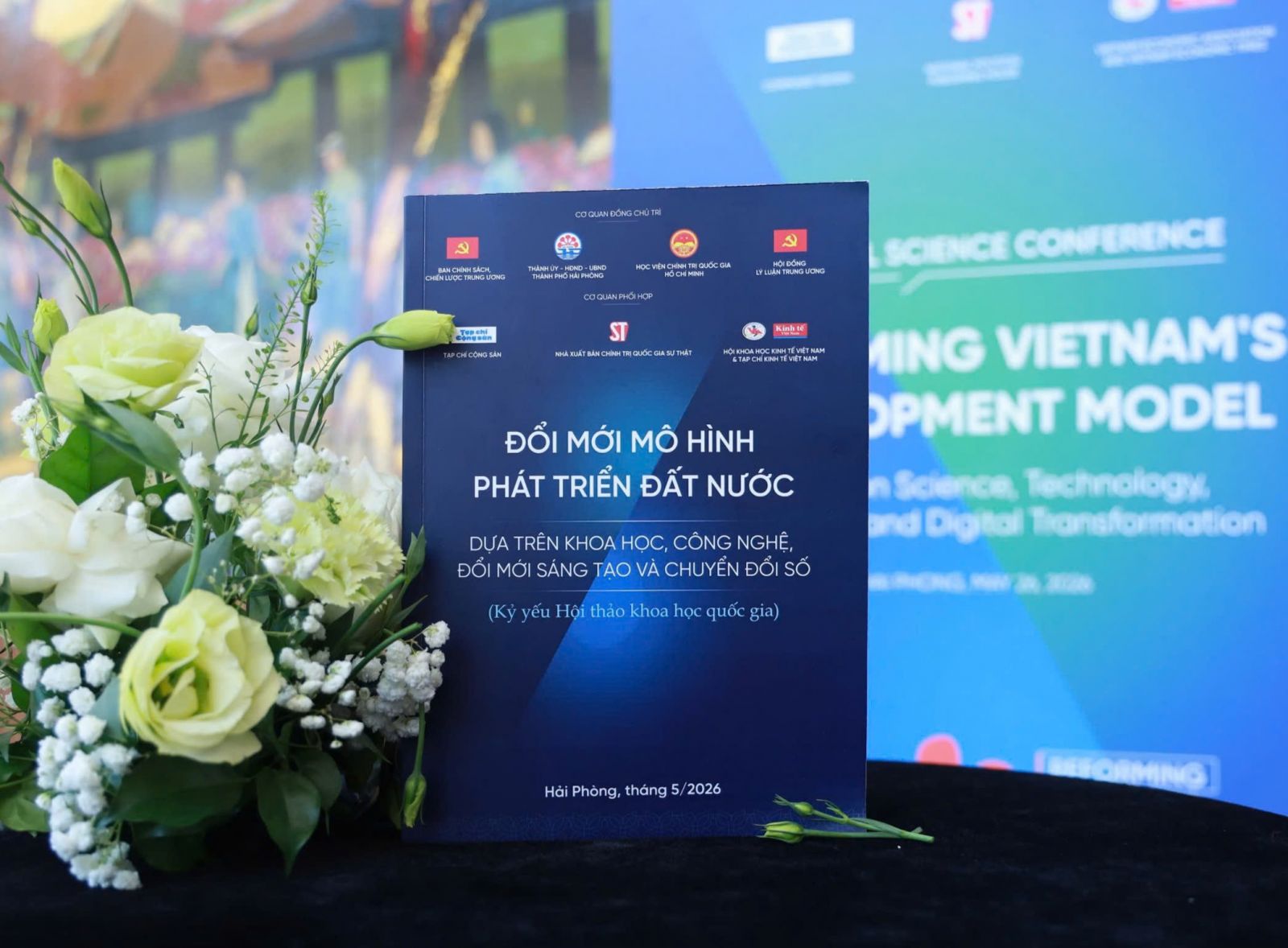
The proceedings of the national scientific conference themed “Innovating the National Development Model Based on Science, Technology, Innovation, and Digital Transformation” have been edited and published by the National Political Publishing House.
The proceedings are divided into two parts: Part One covers the theoretical foundations and trends in innovating the national development model through science, technology, innovation, and digital transformation; Part Two outlines the orientations and solutions for advancing the innovation of the national development model based on science, technology, innovation, and digital transformation.
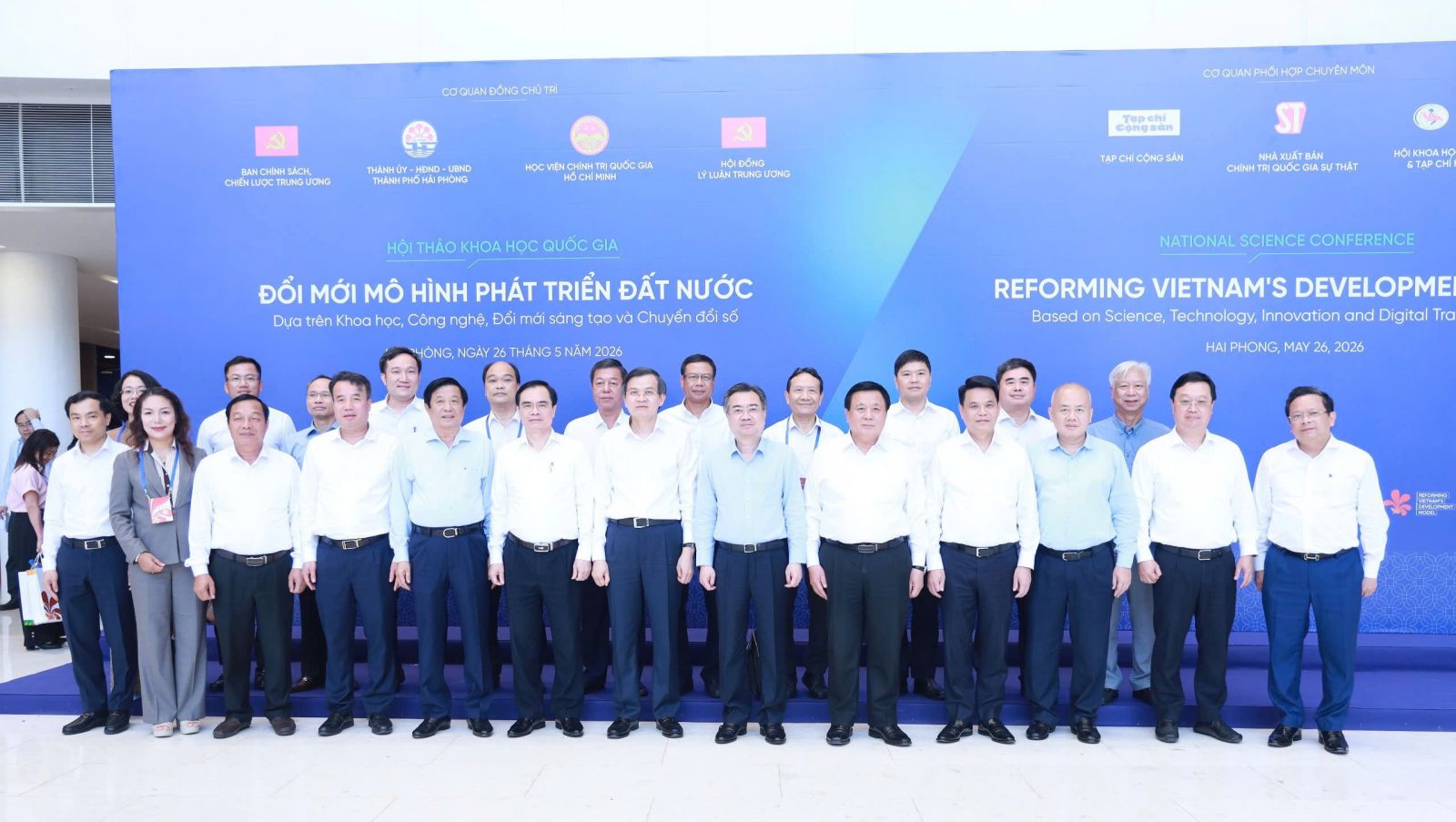
Delegates take a commemorative photo at the seminar.

Comments