



On August 17, 2026, in Ho Chi Minh City, the National Political Publishing House "Truth," in collaboration with the Ho Chi Minh National Academy of Politics and the People’s Police University of Security, will host a national scientific seminar titled: "The Merger of Administrative Units in Relation to Regional Sustainable Development and Inter-regional Linkages in Vietnam."
National Scientific Seminar: “Merger of Administrative Units, Sustainable Regional Development, and Regional Linkages in Vietnam”
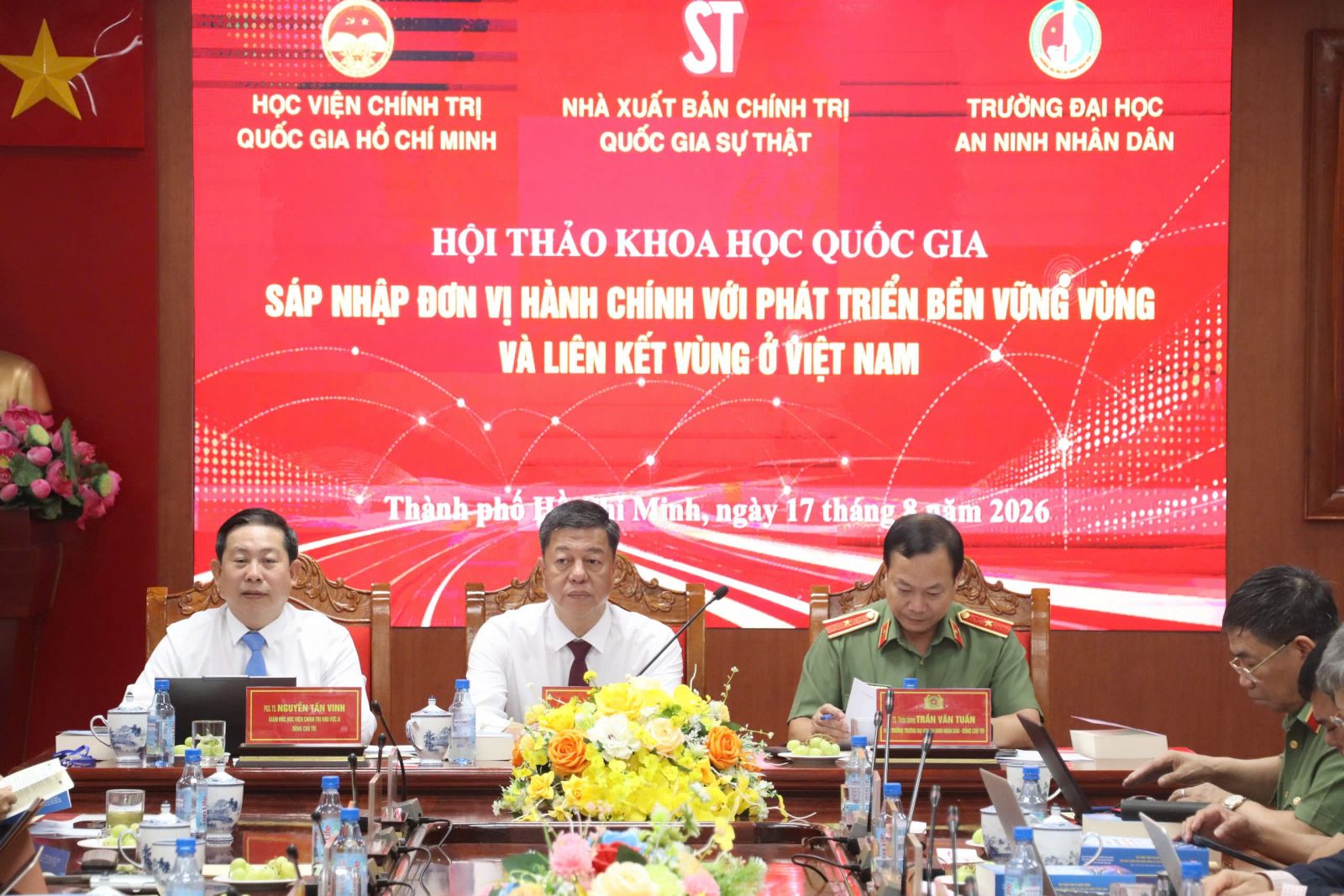
Chairs of the Seminar.
The seminar was chaired by the following individuals: Assoc. Prof. Dr. Vu Trong Lam, Member of the Party Committee of the Central Agencies of the Party, Party Committee Secretary, and Director and Editor-in-Chief of the National Political Publishing House "Su That" (Truth); Assoc. Prof. Dr. Nguyen Tan Vinh, Party Committee Secretary and Director of the Regional Political Academy II (under the Ho Chi Minh National Academy of Politics); and Major General Dr. Tran Van Tuan, Party Committee Secretary and Rector of the People’s Police University.
Also in attendance were leaders from various central and local departments, ministries, and sectors; representatives from units affiliated with the co-organizing institutions; as well as a large number of scholars, experts, and administrators from academies, universities, research institutes, and other relevant organizations.
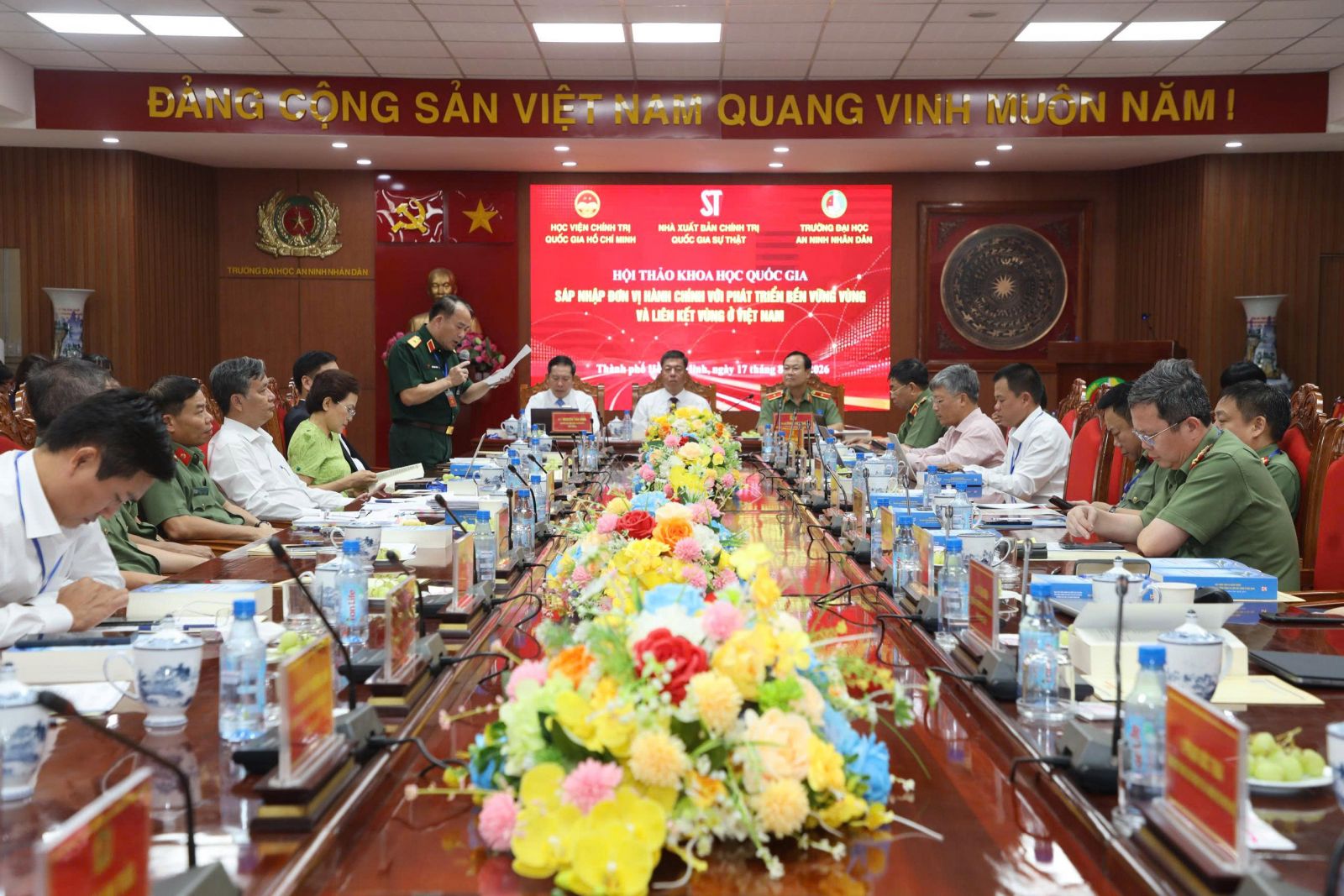
An overview of the seminar.
After 40 years of *Doi Moi* (renewal), Vietnam has achieved significant, historically meaningful milestones; the nation’s foundation, potential, international standing, and prestige have grown substantially. As the country enters a new phase of development, it is essential to continue innovating our mindset, refining institutional frameworks, enhancing governance quality, and reorganizing our development landscape to align with the nation’s scale, level of advancement, and aspirations. Amidst the shifts toward digital and green transitions, coupled with intensifying international competition, the creation of a lean, effective, and efficient governance model—capable of optimally mobilizing and allocating resources—has become an urgent necessity.
In this process, the reorganization of administrative units in 2025 represents a structural shift; it goes beyond mere organizational restructuring to reshape the development landscape and the governance model itself. Starting July 1, 2025, a two-tier local government structure will be officially implemented nationwide. These changes open up new opportunities for integrated planning, infrastructure connectivity, resource allocation, and strengthened regional linkages—while simultaneously demanding the transformation of advantages in scale and space into tangible development capacity.
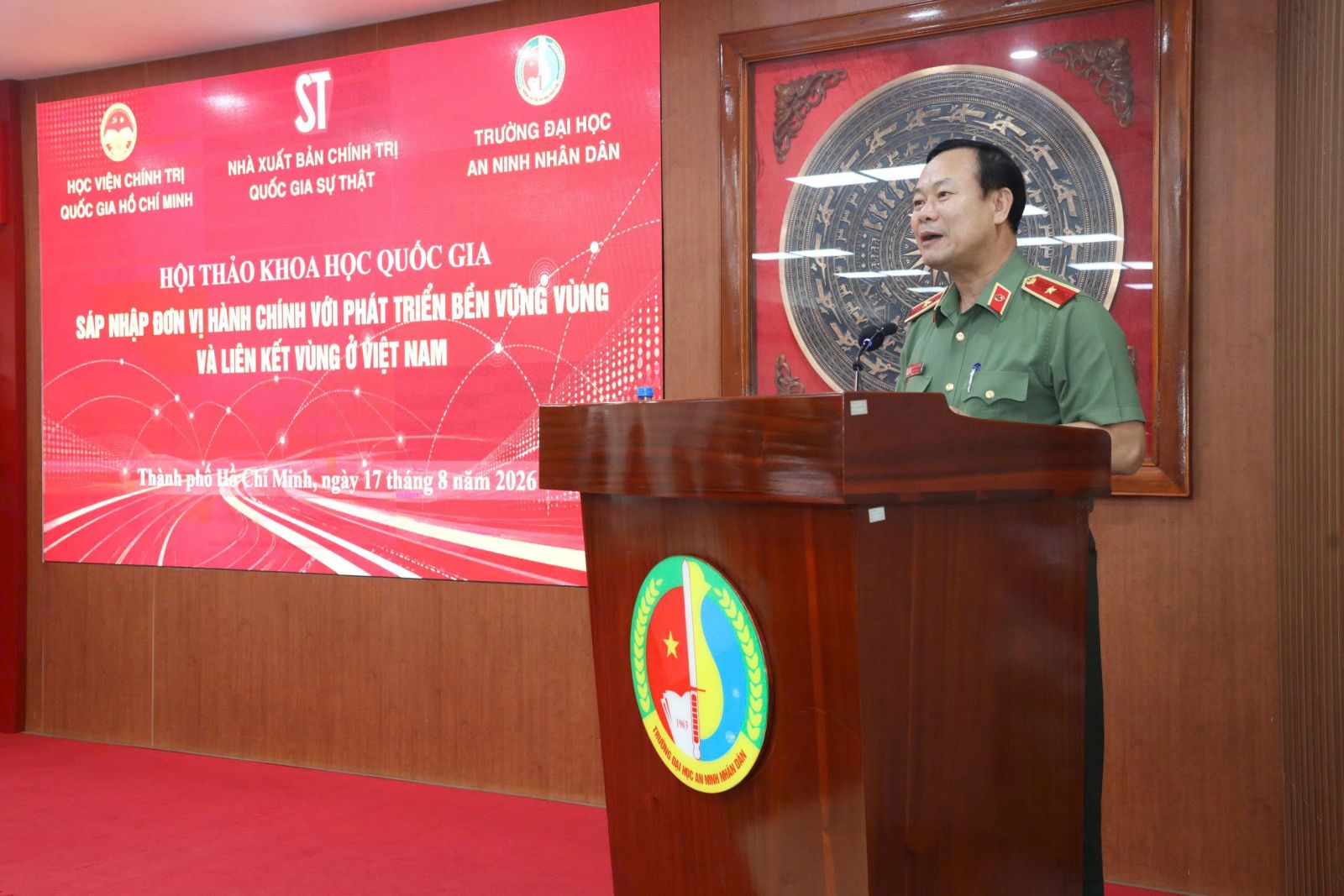
Major General, Dr. Tran Van Tuan, Secretary of the Party Committee and Rector of the People’s Security University, delivered opening remarks at the seminar.
Following more than a year of implementing the overarching organizational model for the political system and the two-tier local government structure, the Third Plenum of the 14th Party Central Committee (July 2026) affirmed that the policy of reforming and streamlining the organizational apparatus—aimed at achieving a leaner, more functional, effective, and efficient system—is sound and aligns with the nation’s development requirements. It was noted that this new model has brought about clear, positive shifts in the organization and operations of the political system, facilitating a transition from mere administrative management toward "developmental governance," while fostering greater proactiveness and creativity at the local and grassroots levels. Nevertheless, the quality of operations remains uneven, particularly at the grassroots level. This necessitates further refinement of internal organizational structures, the enhancement of governance and development-facilitating capacities, and improved effectiveness in serving the public—all of which are essential for the successful implementation of the Resolution of the 14th National Party Congress.
At the conference reviewing the first year of the overarching organizational model for the political system and the three-tier government structure, General Secretary and President To Lam emphasized that, following the initial phase of organizational restructuring, the primary focus must shift decisively toward improving operational quality, service delivery, and the development-facilitating capacity of the new apparatus. This represents a critical shift in mindset: moving from "streamlining for the sake of compactness" to "organizing for the sake of development"; from a focus on organizational structure to a focus on governance effectiveness; and from completing administrative mergers to fostering substantive integration across institutions, resources, data, infrastructure, and development space. Against this backdrop, the seminar "Merging Administrative Units: Sustainable Regional Development and Regional Linkages in Vietnam" serves as a scholarly forum for researchers, experts, policymakers, and practitioners directly involved in the implementation process. Participants focused on clarifying the theoretical, political, legal, and practical foundations for the reorganization of administrative units. They examined the impacts on the spatial organization of development, urban and regional planning, infrastructure, and resource allocation. Furthermore, they assessed initial outcomes, identified emerging challenges, and proposed solutions for operating the new administrative model—aiming to optimize spatial development and strengthen regional connectivity.
The organizing committee received nearly 100 papers from leaders of central and local government agencies, as well as scholars and administrators from across the country. These contributions offer a multidimensional perspective, analyzing the theoretical, political, legal, and practical underpinnings of administrative unit reorganization. They also explore the relationship between this process and sustainable regional development, regional linkages, and the modernization of local governance, while putting forward a range of solutions and recommendations with significant practical value.
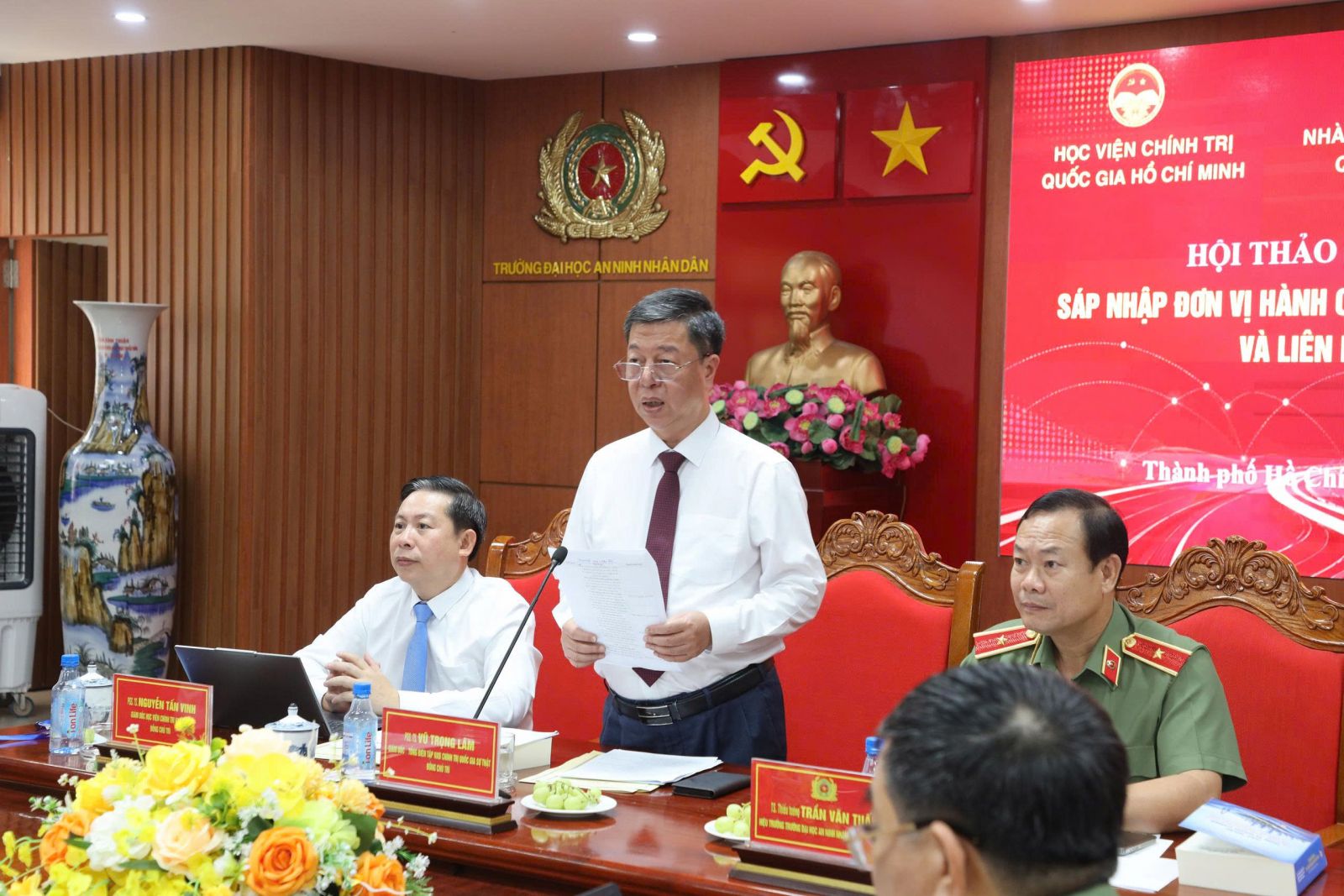
Assoc. Prof. Dr. Vu Trong Lam, Secretary of the Party Committee, Director, and Editor-in-Chief of the National Political Publishing House "Su That" (Truth), delivered the introductory remarks at the seminar.
In his introductory remarks, Assoc. Prof. Dr. Vu Trong Lam emphasized that the reorganization of administrative units is a comprehensive process. It entails restructuring organizational frameworks, authority, socio-economic spaces, infrastructure, and resource allocation. Simultaneously, it involves establishing and building relationships between the State, its citizens, and businesses—fostering a model that is closer to the people, dedicated to serving them, and oriented toward facilitating development. Therefore, the measure of success extends beyond merely streamlining the administrative apparatus; the core focus lies in operational quality, the efficiency of public service delivery, the capacity to unlock and allocate resources, the substantive nature of regional integration, and a sustainable improvement in the people's quality of life.
According to Assoc. Prof. Dr. Vu Trong Lam, the expansion of administrative units must be closely linked to the integration of planning, the connectivity of infrastructure, the balancing of interests, and the narrowing of development gaps between localities. This process aims to create integrated development spaces, thereby leveraging local advantages and enhancing overall competitiveness.
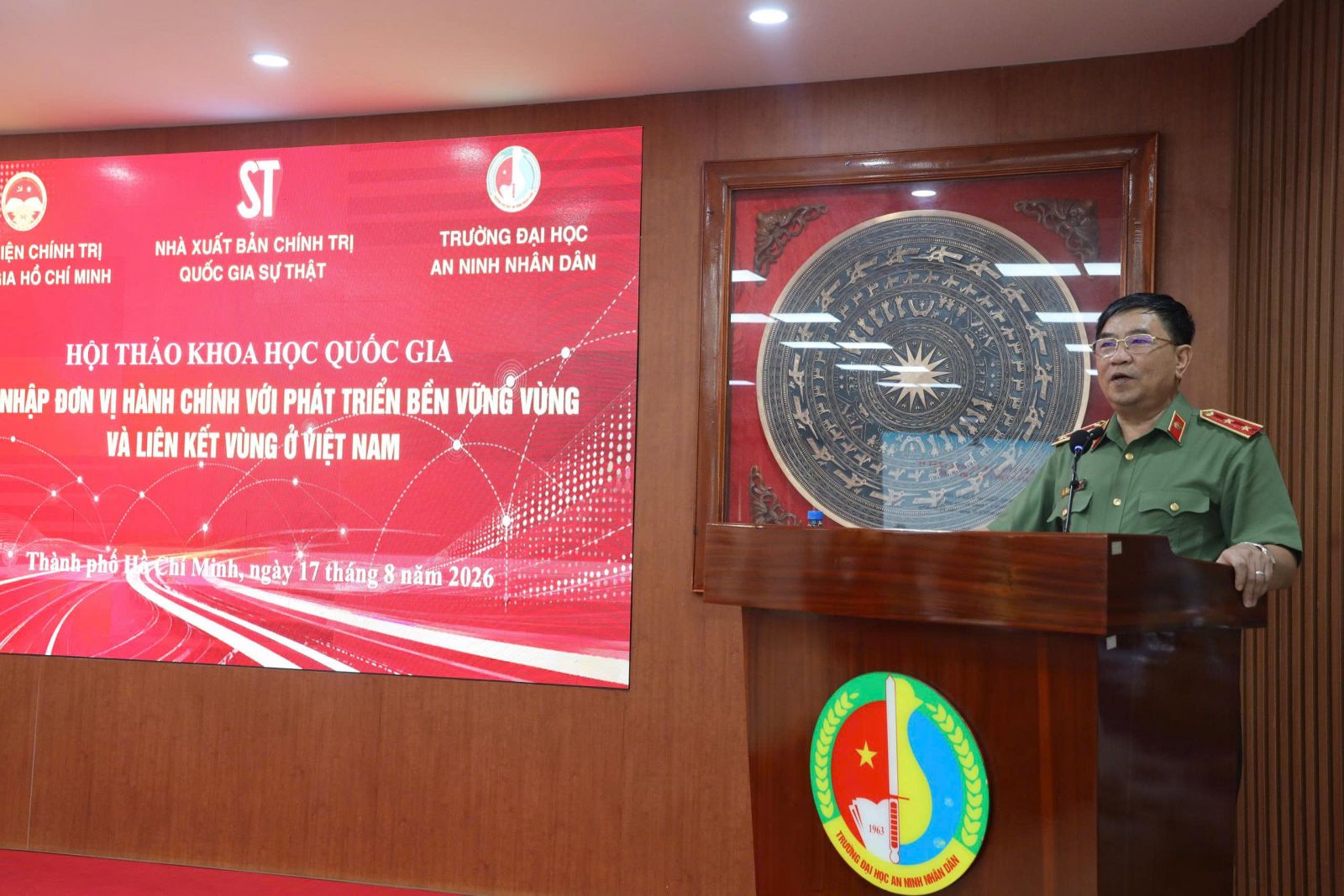
Lieutenant General, Professor, PhD Tran Vi Dan—member of the Central Theoretical Council, Director of a department, and member of the Thematic Research Group assisting the Minister of Public Security—presented a paper titled: “Regional Cooperation on Security and Public Order: Concepts and Practice.”
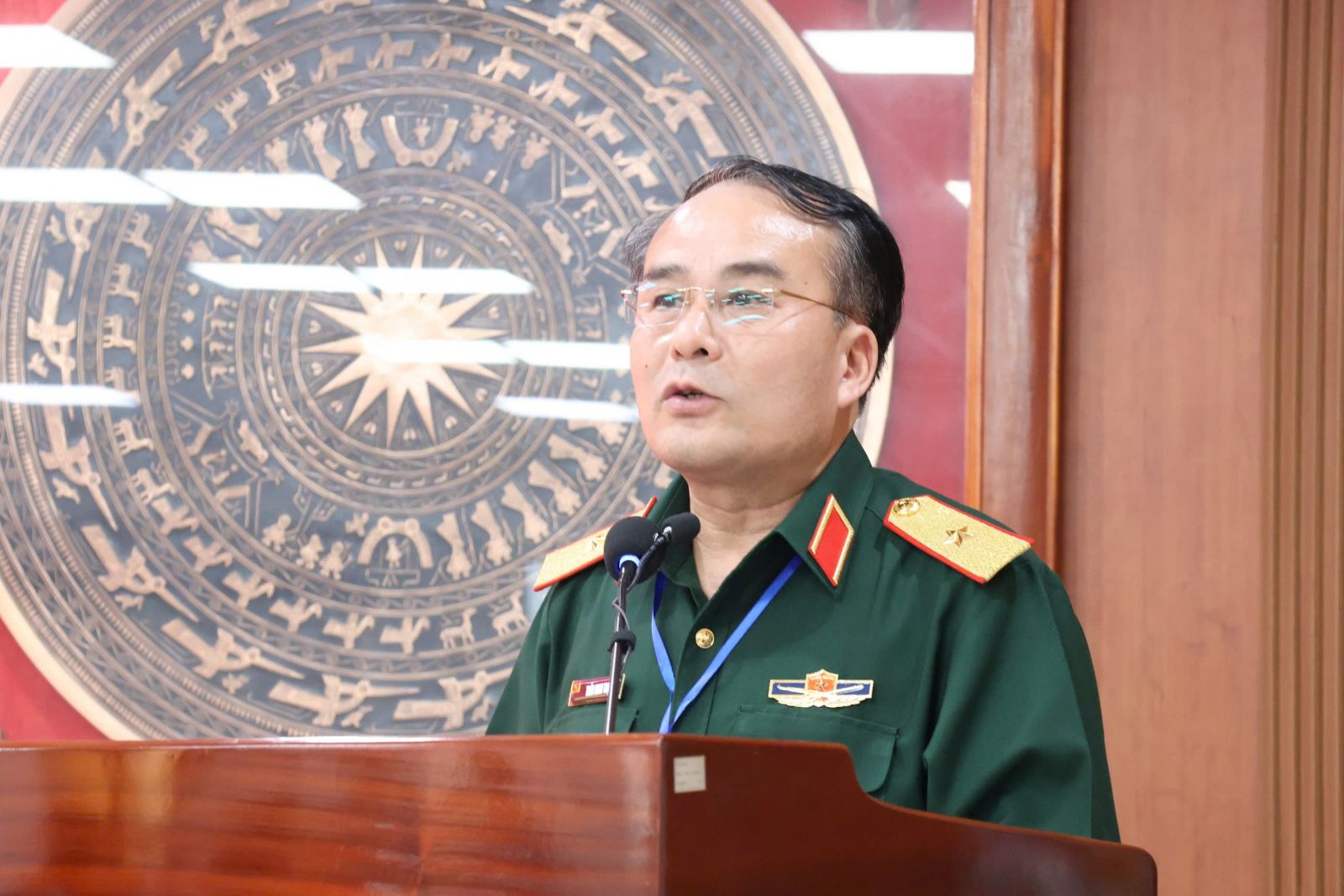
Major General Tran Minh Trong, Deputy Political Commissar of Military Region 5, presented a paper titled: "Strengthening national defense and security in the context of administrative unit mergers: Contributing to the sustainable development of the Central Coast and Central Highlands region."
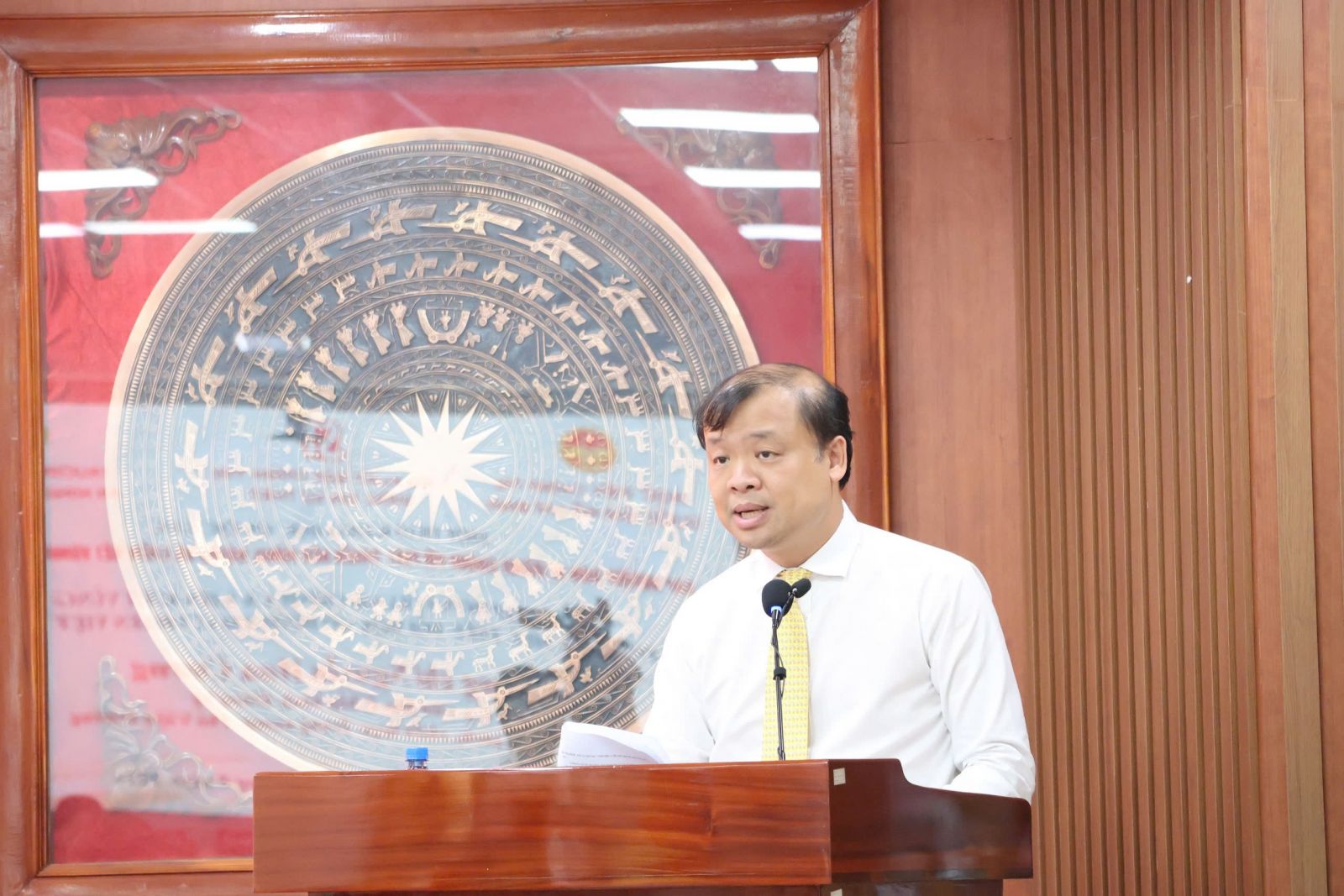
Nguyen Hoa Cuong, Deputy Director of the Institute for Policy and Strategy, presented a paper titled: "Merging Administrative Units for Regional Integration: Supporting the Goal of Transforming Vietnam’s Development Model."
The discussions held during the seminar provided additional perspectives on the reorganization of administrative units. A wealth of experience, solutions, and policy recommendations were shared, helping to clarify key issues involved in implementing the Party and State’s policy on the reorganization of administrative units.
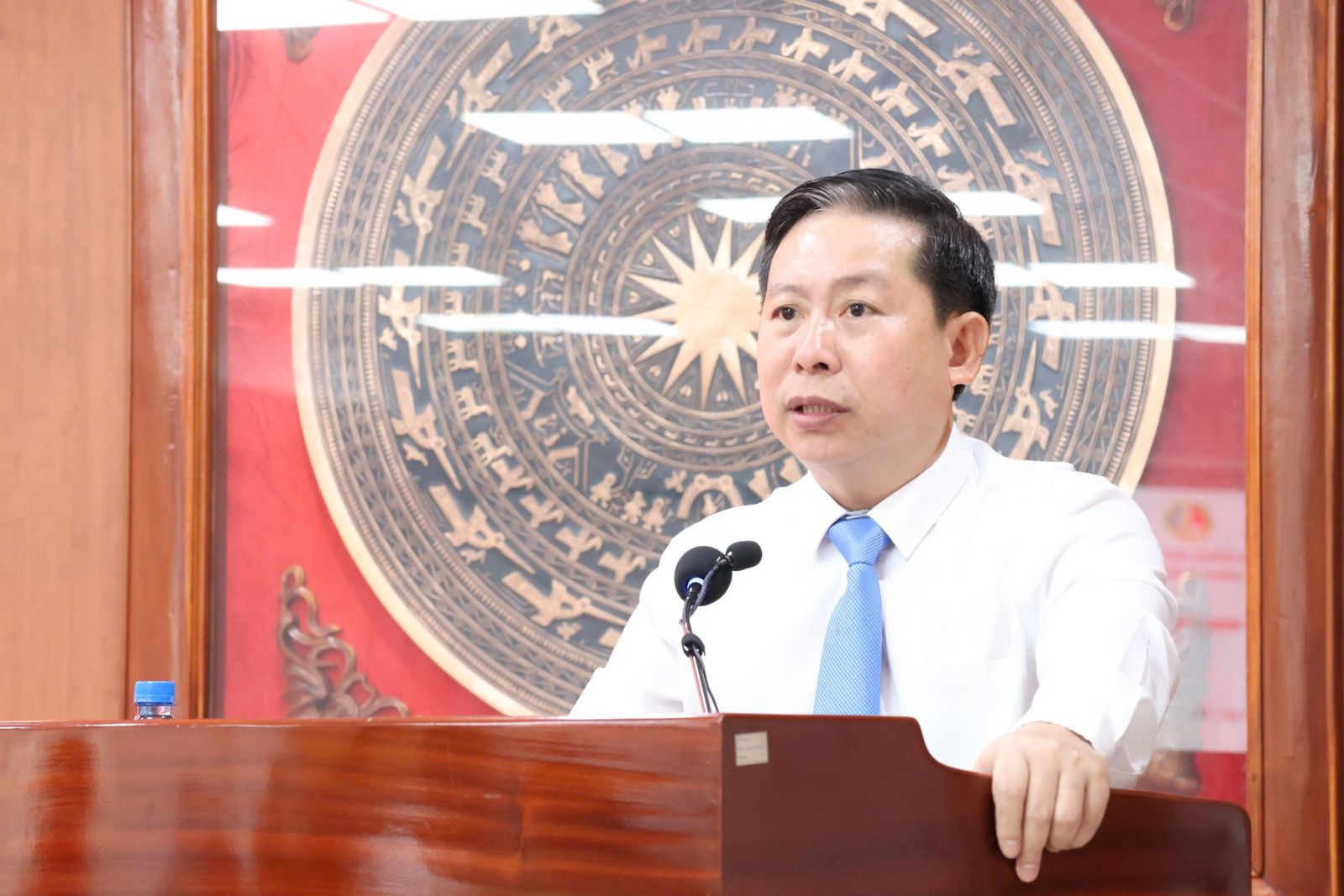
Assoc. Prof. Dr. Nguyen Tan Vinh, Secretary of the Party Committee and Director of the Regional Political Academy II—who is also a member of the Central Theoretical Council—delivered the concluding remarks at the seminar.
n his concluding remarks, Assoc. Prof. Dr. Nguyen Tan Vinh, Secretary of the Party Committee and Director of the Regional Political Academy II, affirmed that the presentations and comments delivered demonstrated a spirit of scientific rigor, objectivity, and responsibility. They effectively addressed numerous issues of both theoretical and practical significance regarding the implementation of policies for the reorganization of administrative units.
The seminar’s findings underscore that the reorganization of administrative units is not merely about streamlining organizational structures or adjusting geographical boundaries; it is also intrinsically linked to the need to reshape development spaces, innovate governance methods, and utilize national resources more effectively. Achieving these objectives requires ensuring synchronization across institutions, planning, infrastructure, data, human resources, and coordination mechanisms among various levels, sectors, and localities. Furthermore, it necessitates fostering public consensus and active participation from the citizenry.
Assoc. Prof. Dr. Nguyen Tan Vinh urged the relevant competent authorities to examine the seminar’s findings. He also called for intensified efforts to synthesize practical experiences, refine institutions and policies, and improve implementation mechanisms. This is essential to ensure that the two-tier local government model operates smoothly, effectively, and efficiently, while simultaneously enhancing governance capacity, the quality of services provided to citizens and businesses, and the effectiveness of regional integration.
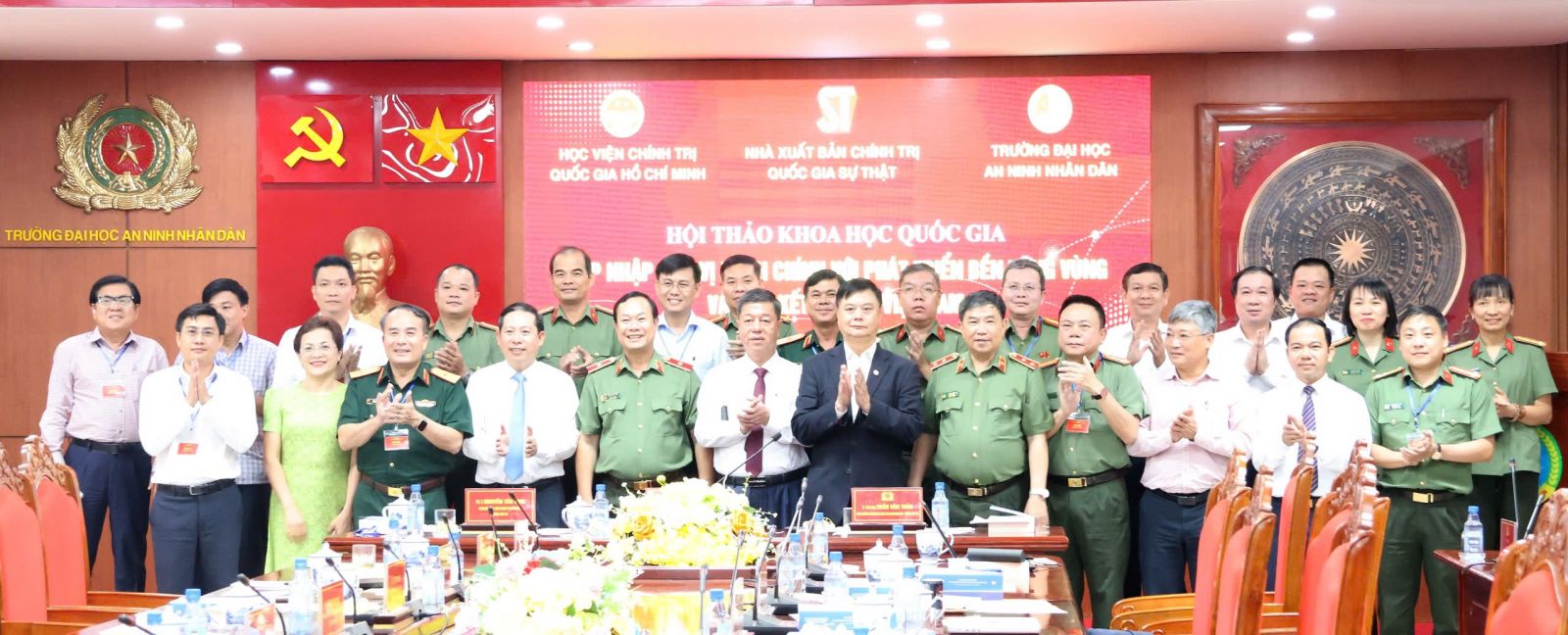
Delegates pose for a commemorative photograph.
The seminar contributed practical scientific arguments toward refining local governance models, effectively leveraging new development spaces, strengthening regional linkages, and fostering rapid and sustainable national development.

Comments